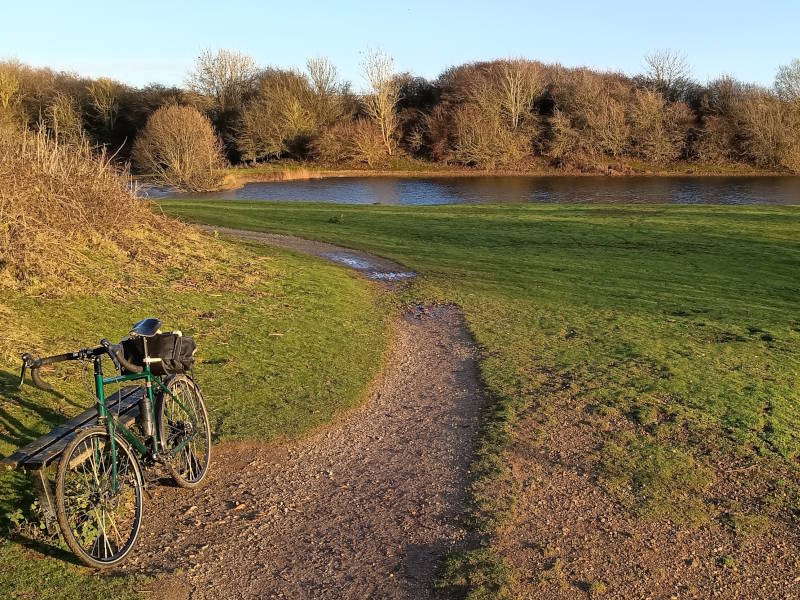
From Britain’s oldest inhabited house (arguably) to Britain’s oldest-ever house (possibly) today: Gray’s Court, York (lived in since 1091) to Star Carr (a mesolithic site with remains of an 11,000-year-old roundhouse). Which included some rather wonderful riding across the Wolds on my Spa Wayfarer (a provider of touring pleasure since 2021).
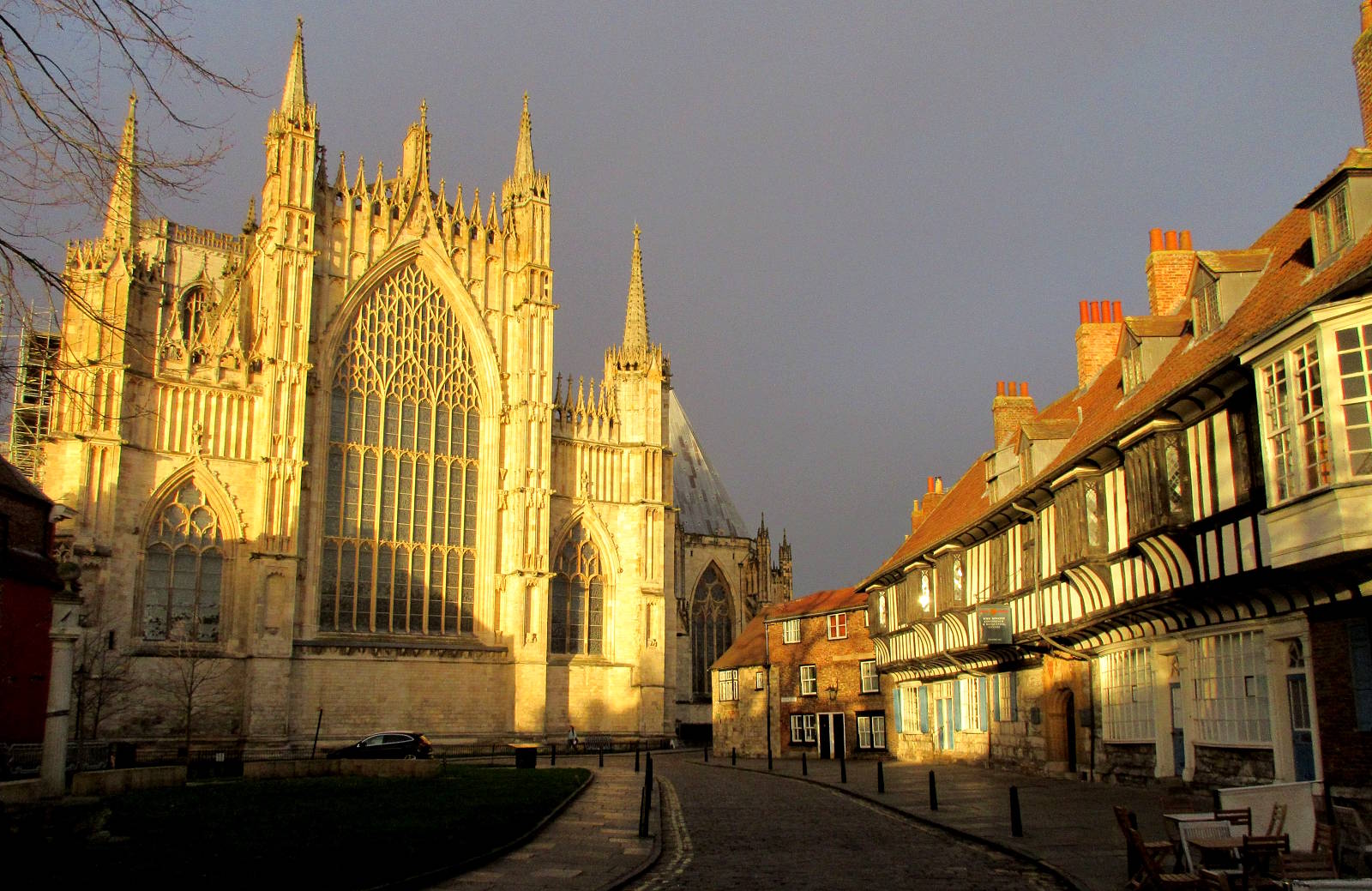
The morning’s mix of heavy rain and strong sunlight gave a dramatic view of York Minster, behind which is found that oldest inhabited house (arguably). The cobbled passageways of Ogleforth and Chapter House Street, just off the main tourist circuit, are a charming stroll. Less charming to cycle, thanks to those cobbles.
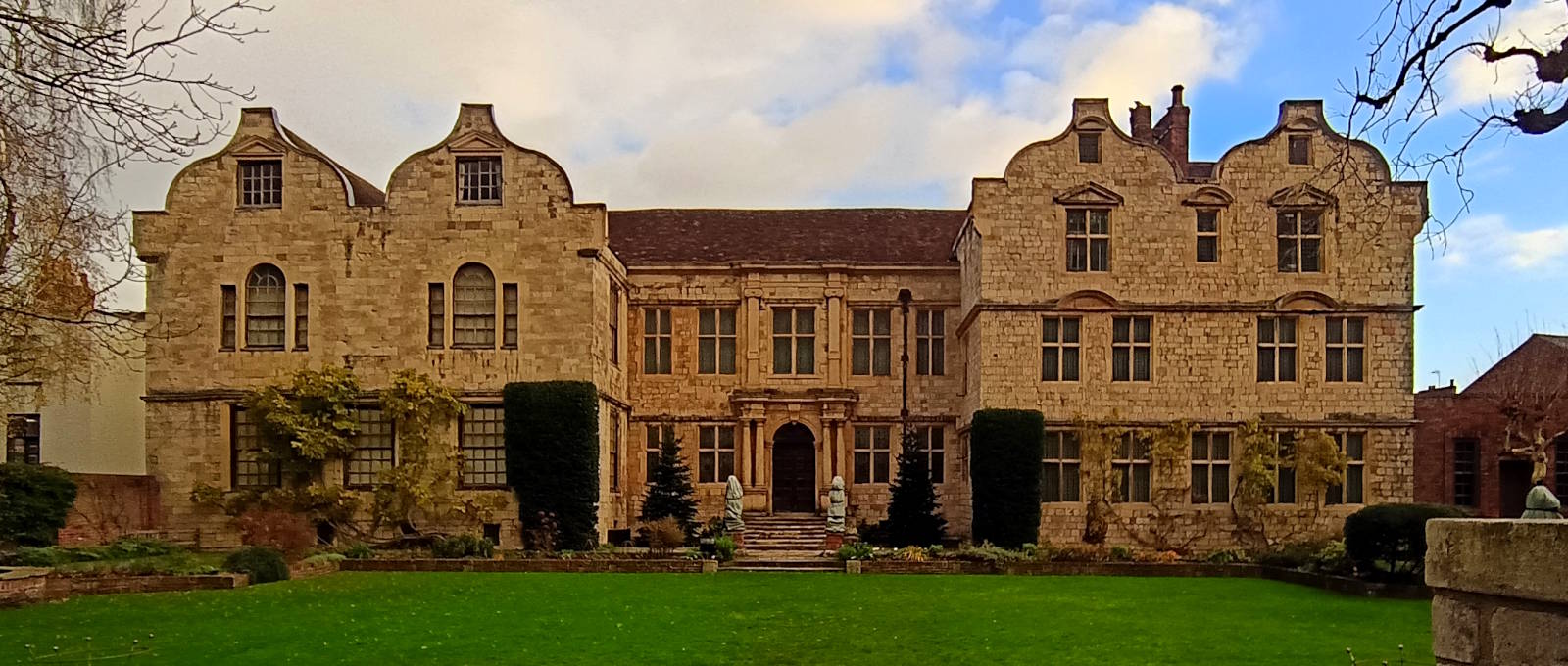
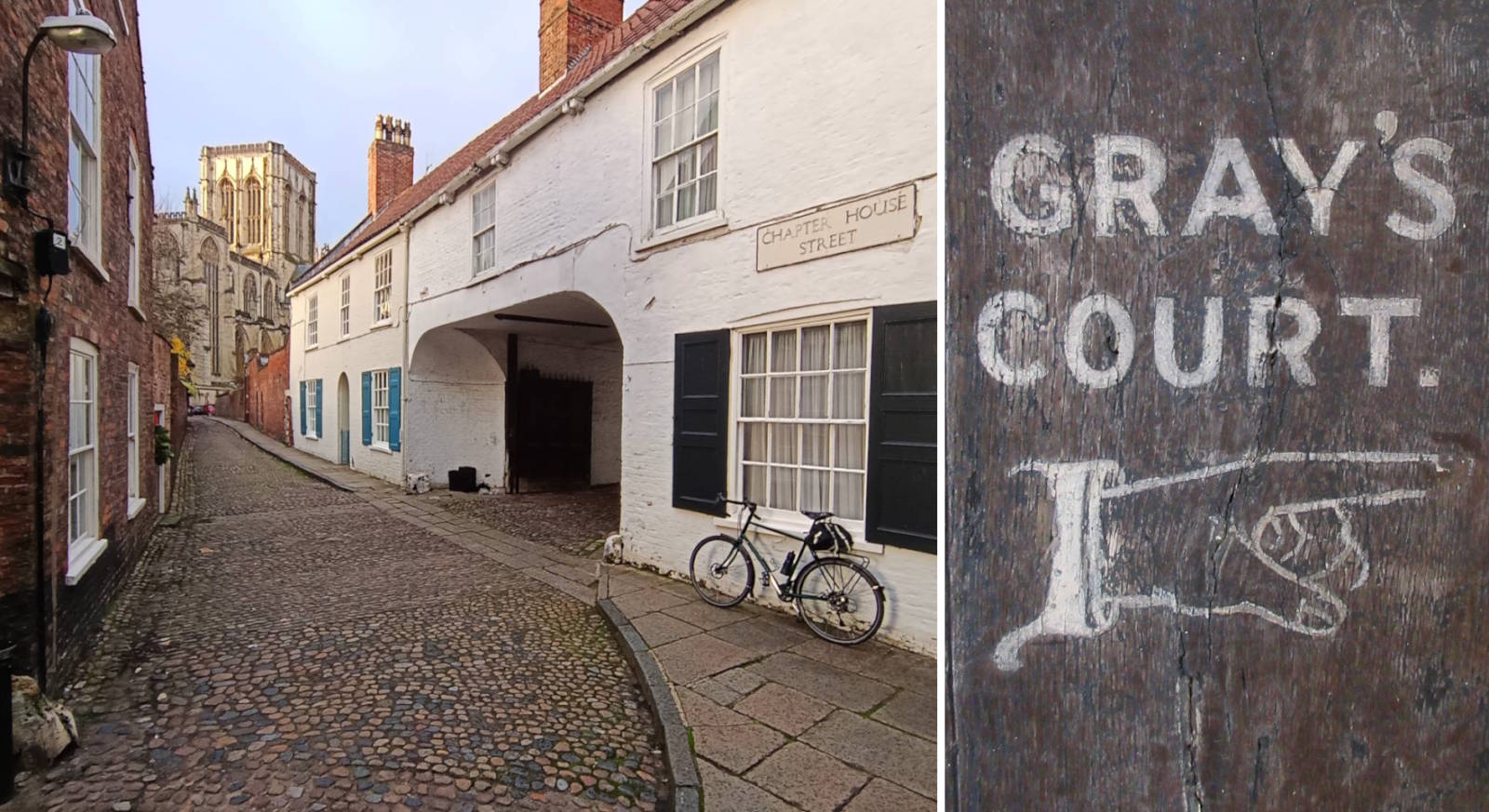
But through a gateway, helpfully signed by one of those old-style pointy fingers, is Gray’s Court. Most of it is a Georgian building that’s now the inevitable boutique hotel, but the older stonework to the left is the back of the Treasurer’s House, and bits of this date back to 1080. Specifically, a wall. Which is all that’s left of the original house. So, if you can inhabit a wall, this is the oldest continuously inhabited dwelling in Britain.
If you can’t inhabit a wall, then Saltford Manor House in Somerset – surviving intact and lived-in since 1150 – is a better candidate. But it was too far for me to cycle this morning from my house a mile from York Minster, so here was where I started. And I was heading to something equally record-breaking but debatable: Star Carr, a Stone Age lakeside settlement outside Scarborough, about forty or fifty miles northwest.

Star Carr is an internationally known archaeological site. Digs over the past eighty years have revealed a lot about Stone Age life over a hundred centuries ago: what our five-hundred-and-fifty-greats-grandparents got up to.
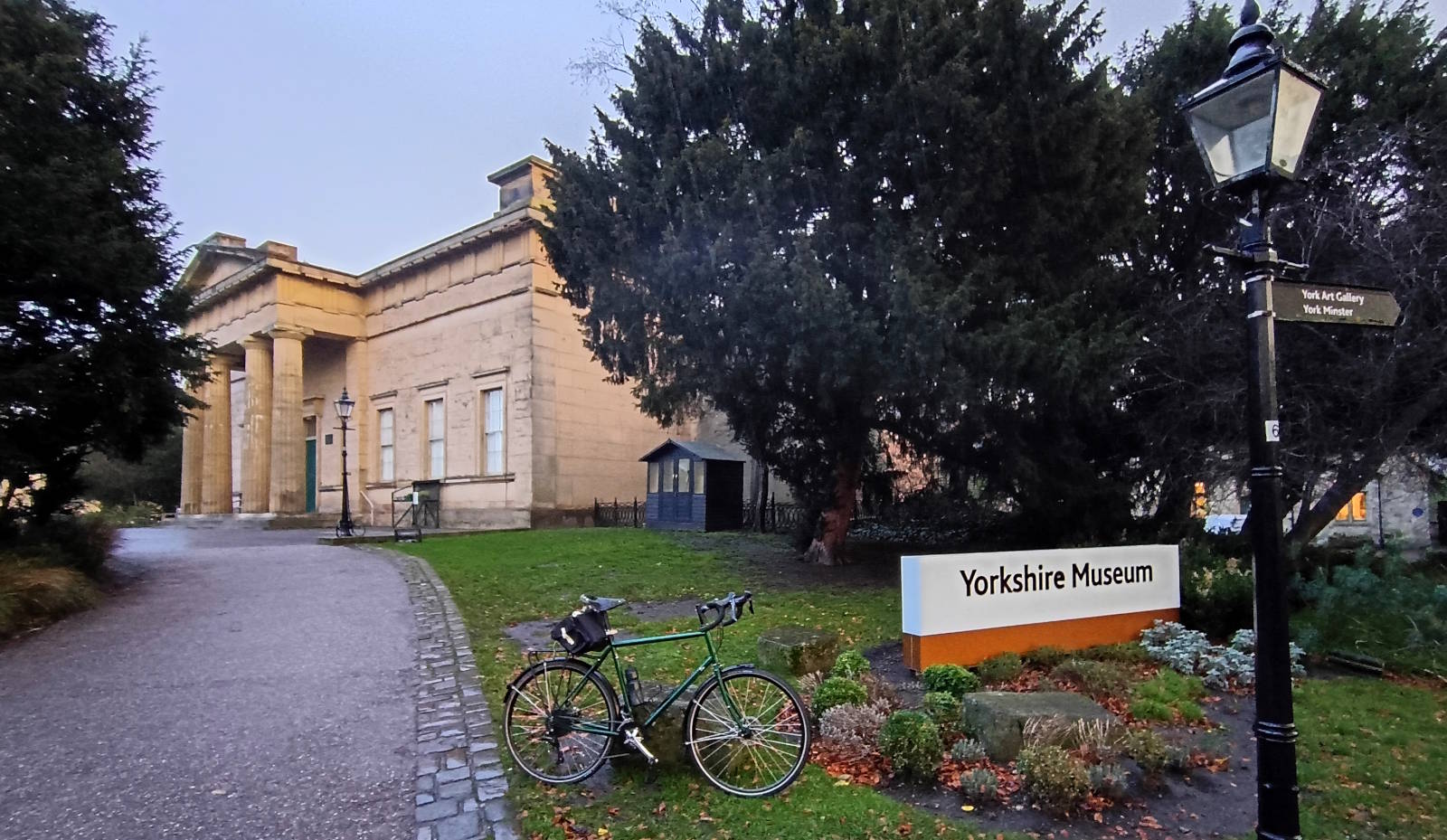
There’s nothing to see now – it’s covered over by farmland – and the most vivid way of understanding everyday existence there is to visit the Star Carr exhibition in the Yorkshire Museum, a couple of hundred yards south of the Minster in Museum Gardens. It’s an unmissable experience. If it’s open. Which it wasn’t yet this early morning, and I was keen to get going.
There may be little to see at Star Carr, but the ride there from York is delightful. I followed the Foss Islands path, through Dunnington and along roads and lanes up towards the Wolds.
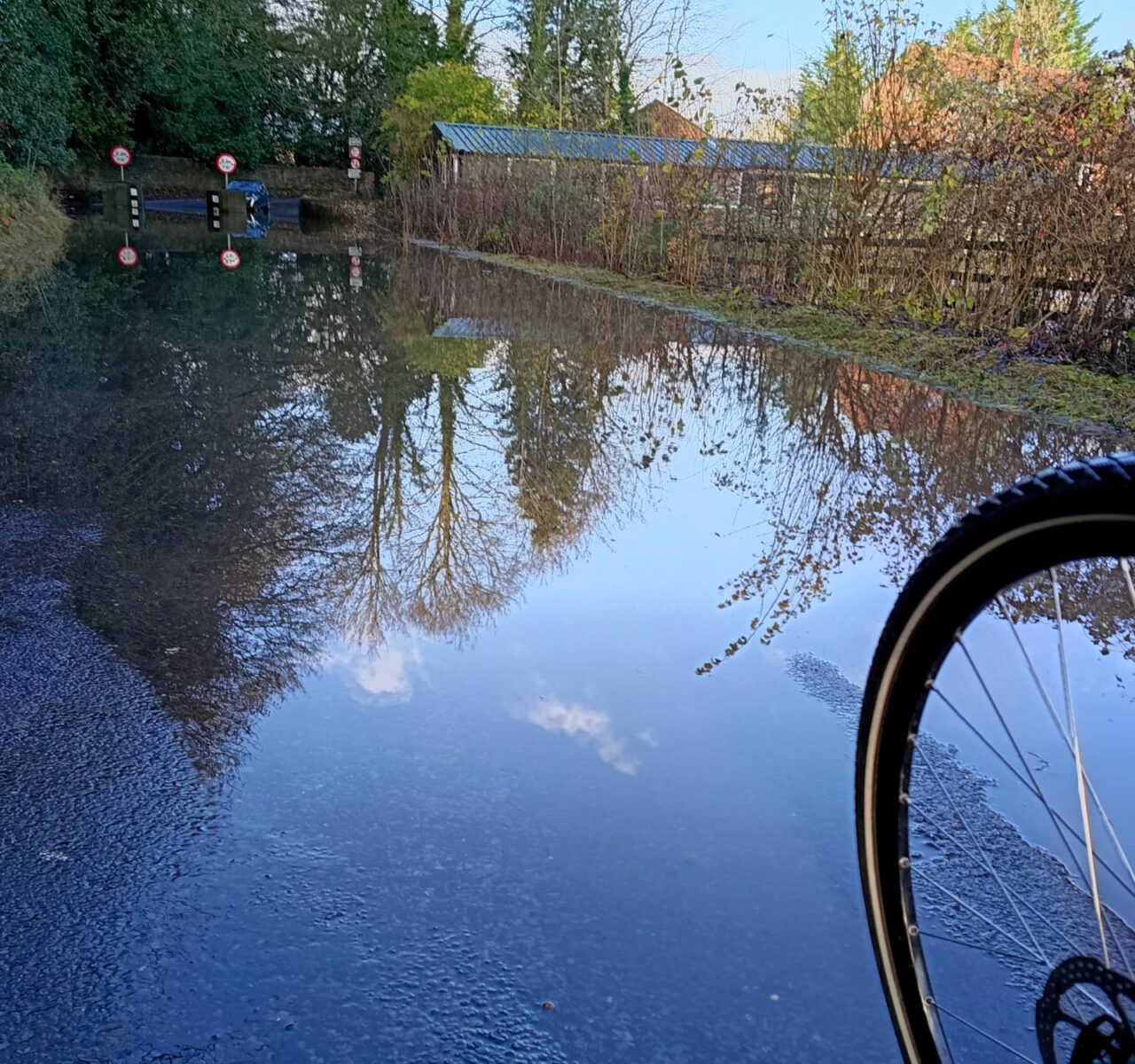
At Buttercrambe, which sounds like some obscure Yorkshire recipe passed off as ‘traditional’ by twee York cafes, the bridge across the Derwent was flooded. I made it through, just, but I now know for sure that my ‘waterproof’ boots are not.
I climbed up, and up…
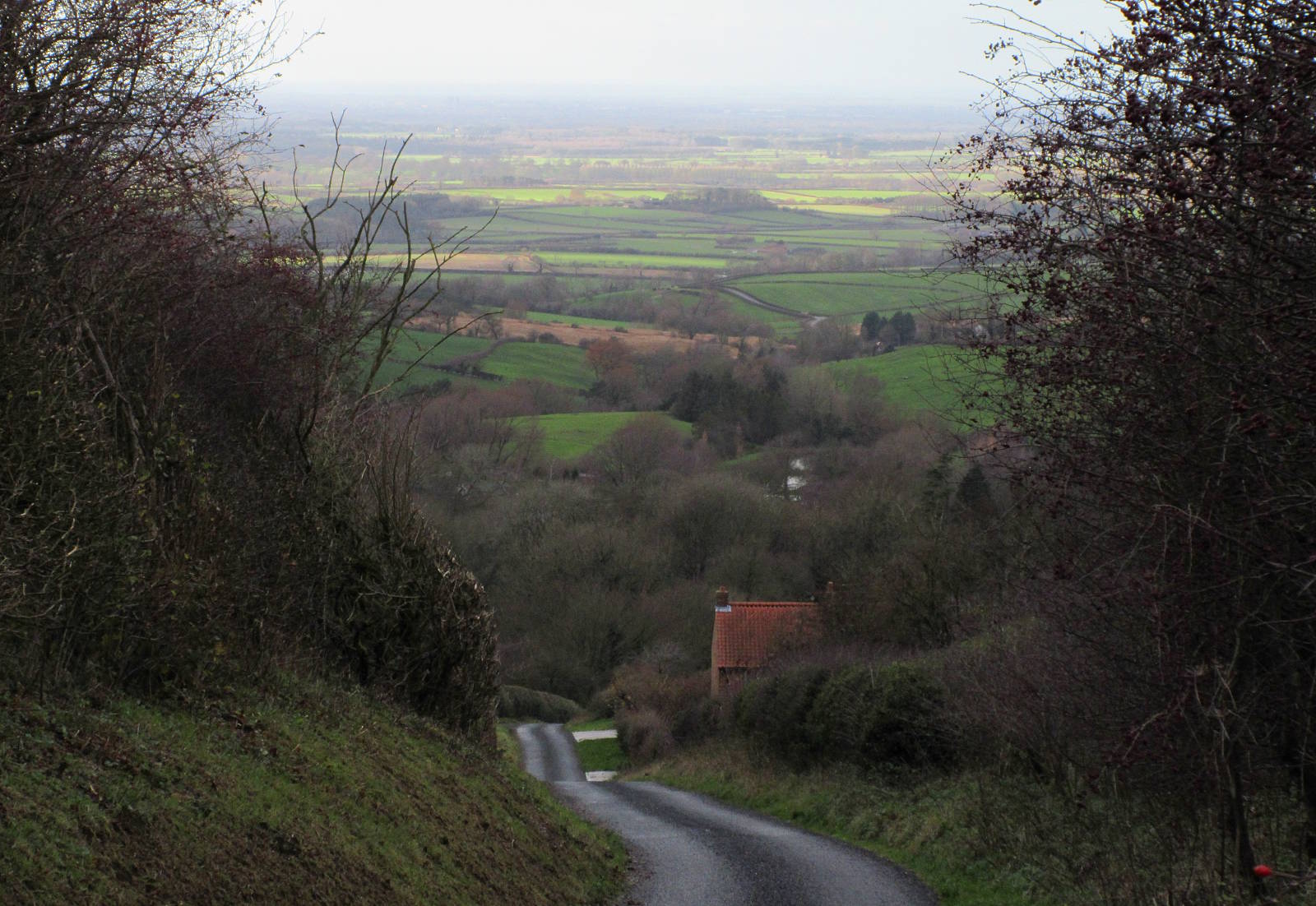
…to the top of the Wolds.
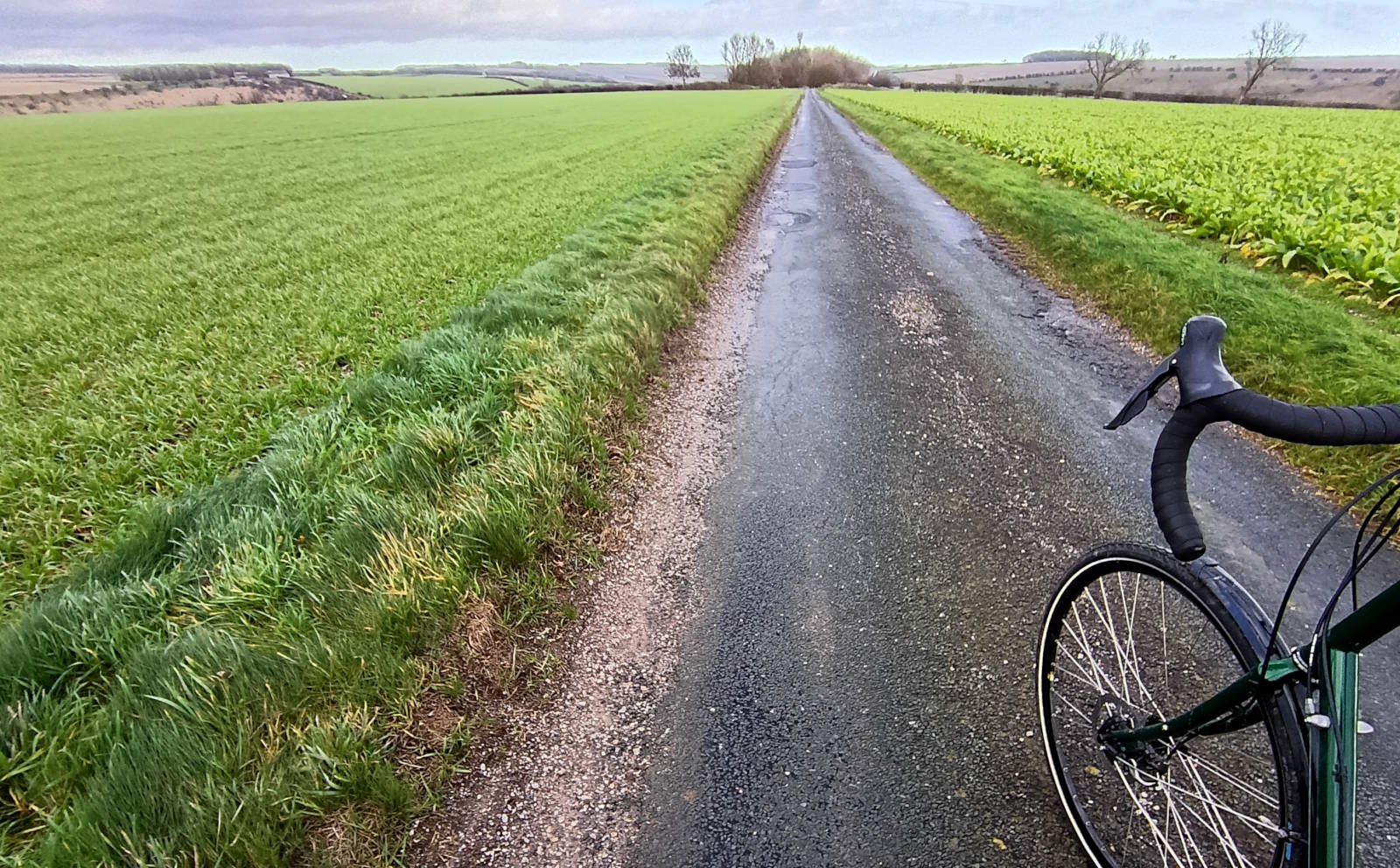
I was put in mind of the Carpenters song: ‘I’m on the top of the Wolds, lookin’ out for shops and cafes / But the only thing to eat that I can find / Is some brown chocolate clag, hidden in my saddlebag / That will feed me at the top of the Wolds.’
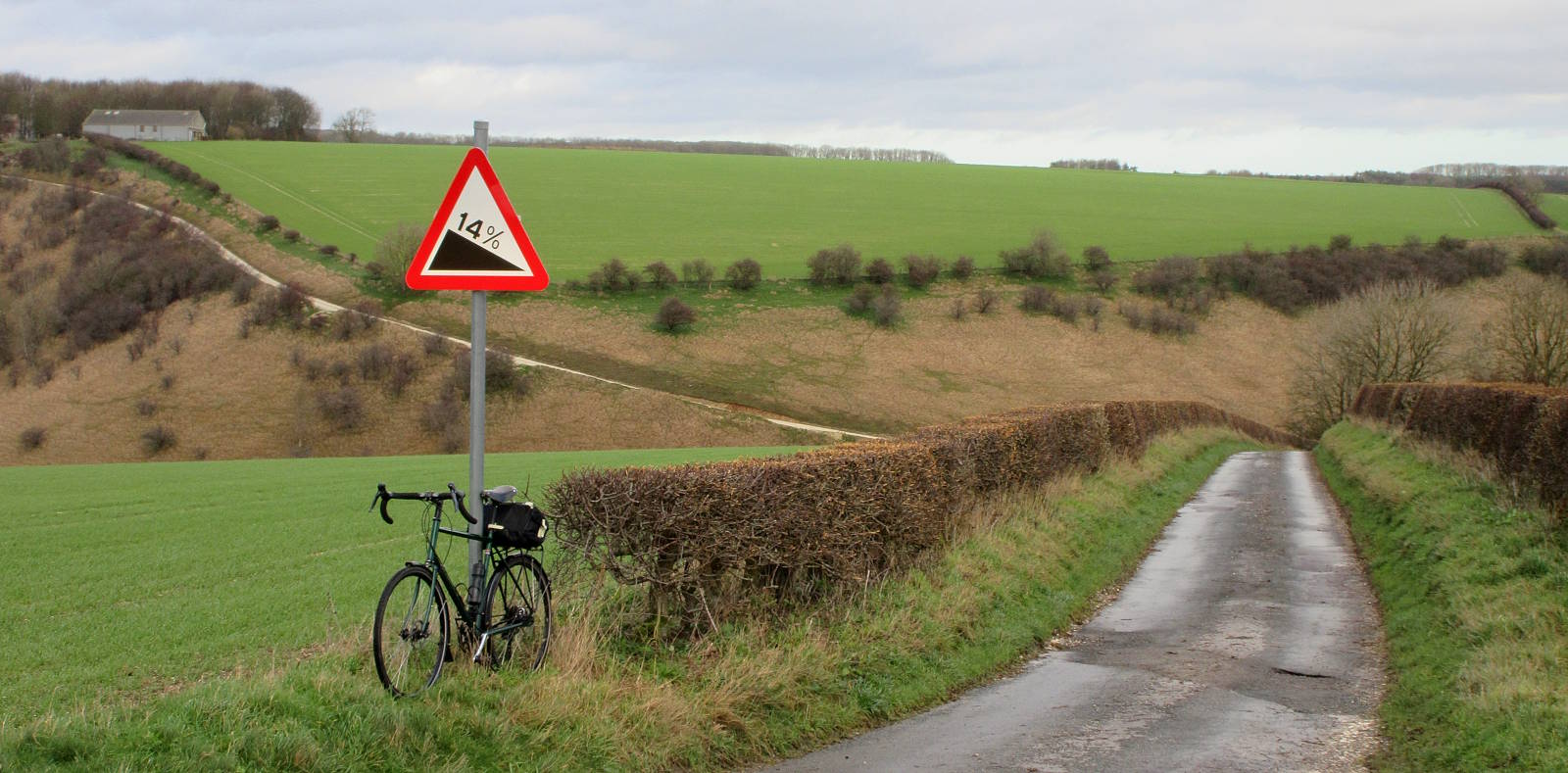
I usually come into Thixendale, the most nestled Yorkshire Wolds Village, down Water Dale. It’s my favourite road in the whole of East Yorkshire. This time, mainly by accident, I came down a parallel one I’d never ridden before.
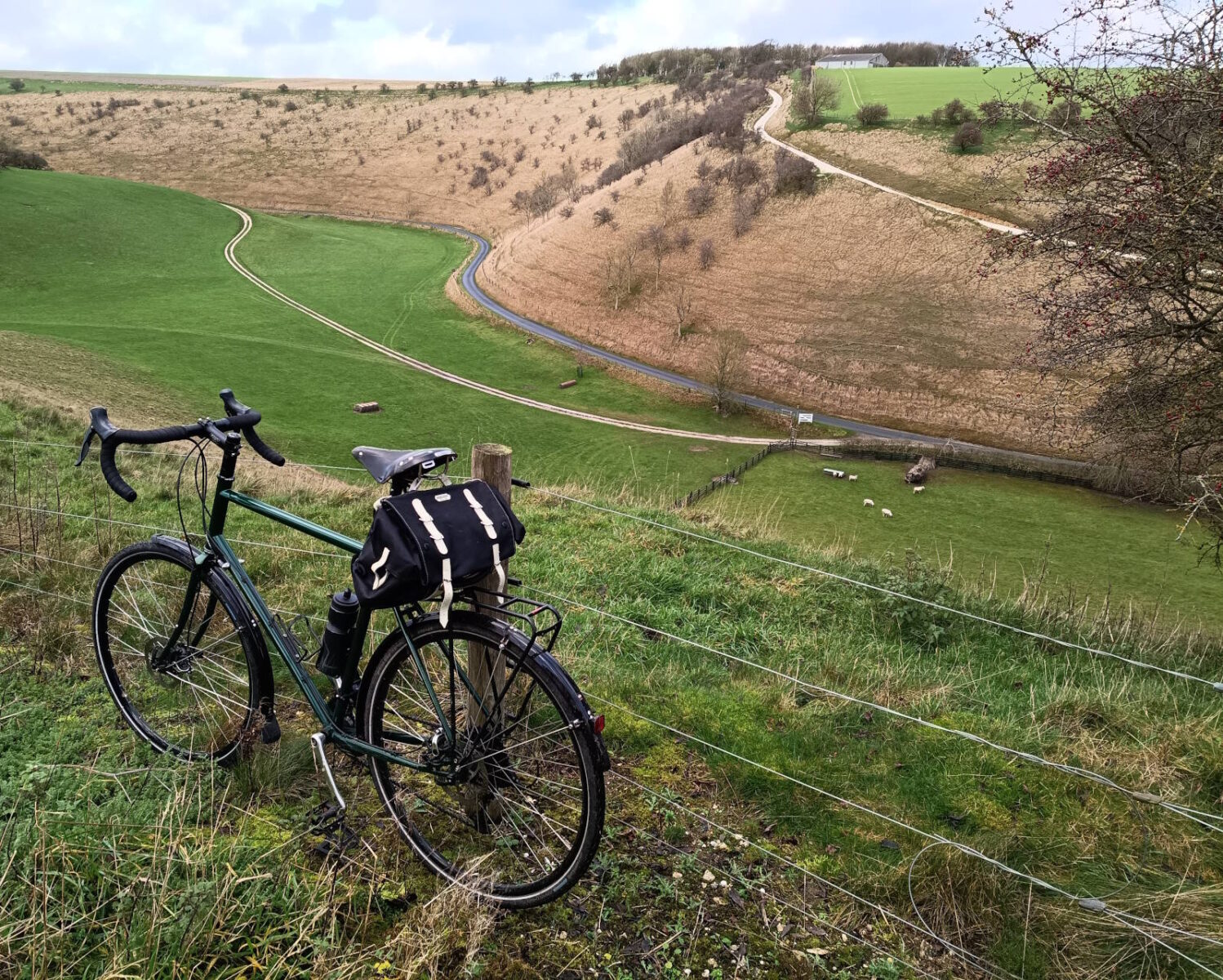
I was rewarded with a red kite’s eye view from the hilltop down over Water Dale below. Sometimes things are just meant to be, whatever your own actions, which may explain why I’m skint.
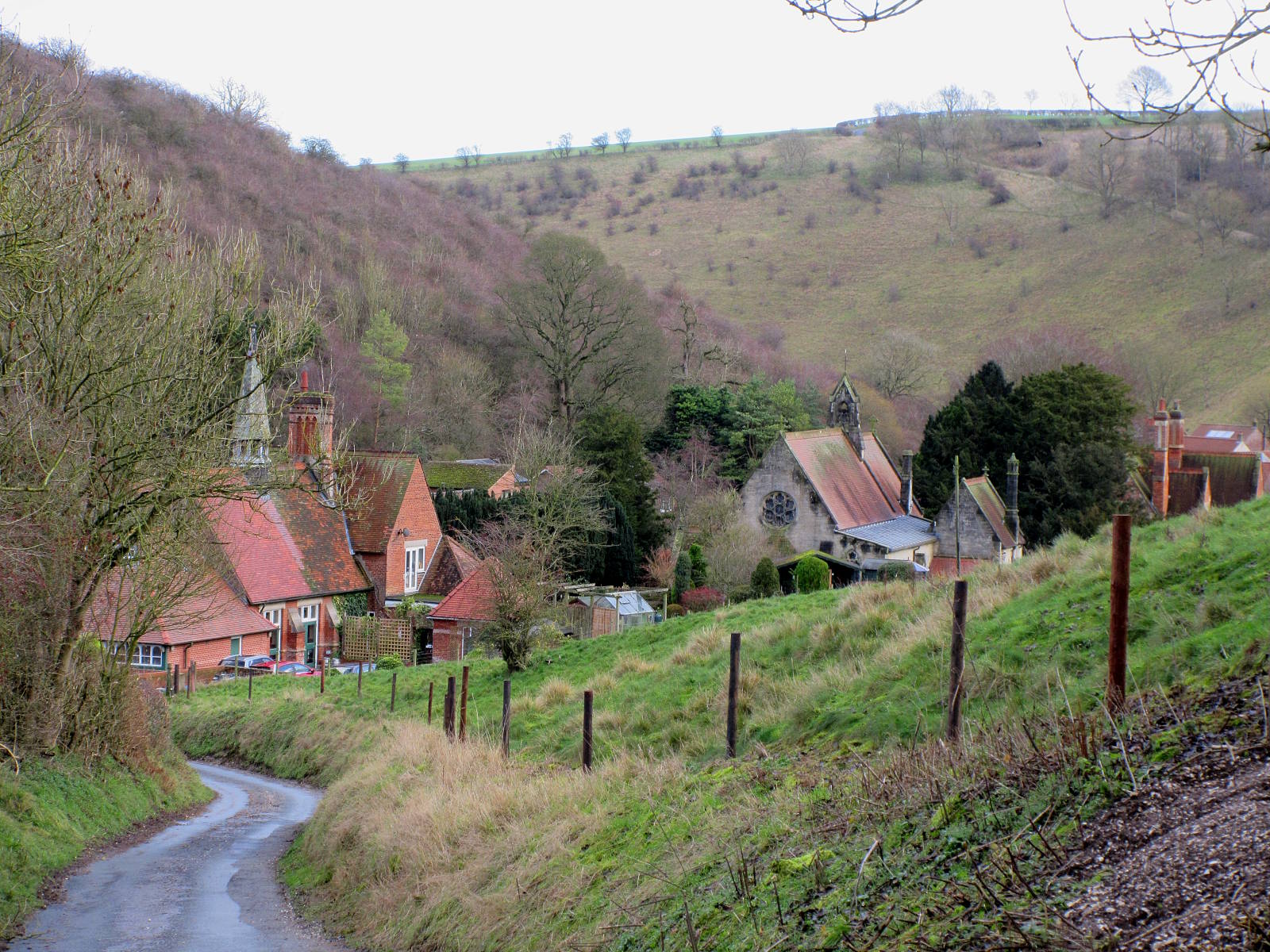
Thixendale, walled in by chalk ridges, did not have a television signal until the late 1970s. So no Love Thy Neighbour, no Black & White Minstrel Show, no On the Buses. It must have been wonderful.
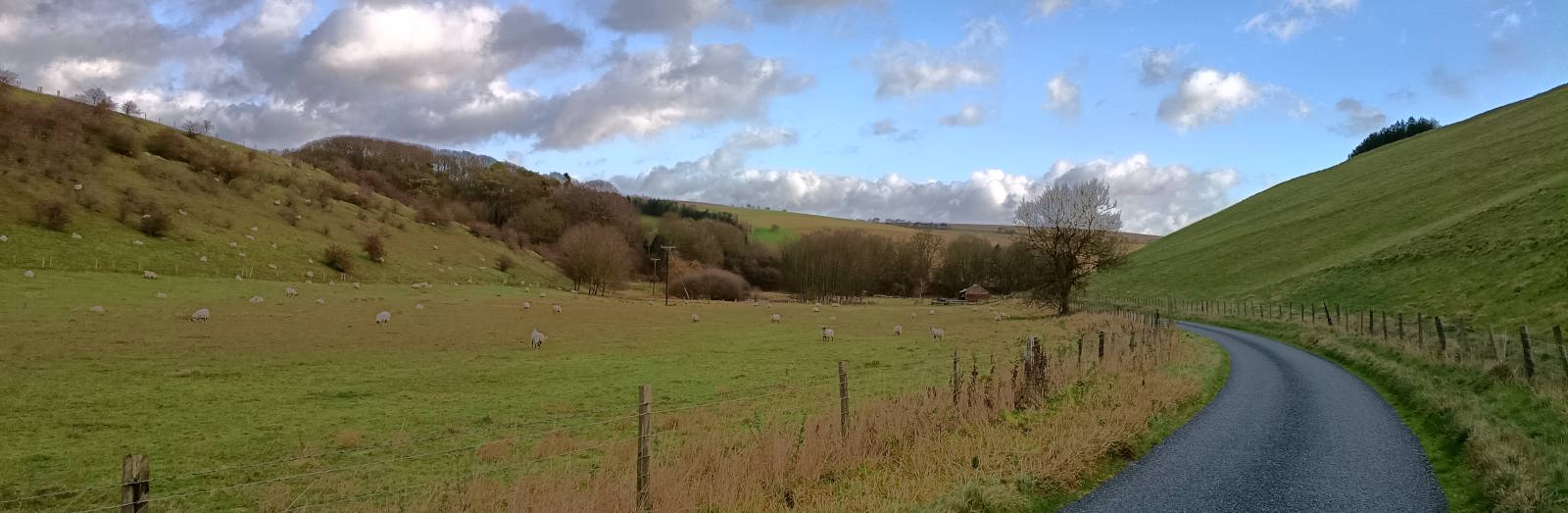
I left the village by Fairy Dale and passed Wharram Percy. I’ve ridden to the deserted medieval village before, but this time I was heading for a lost settlement that was almost twenty times older.
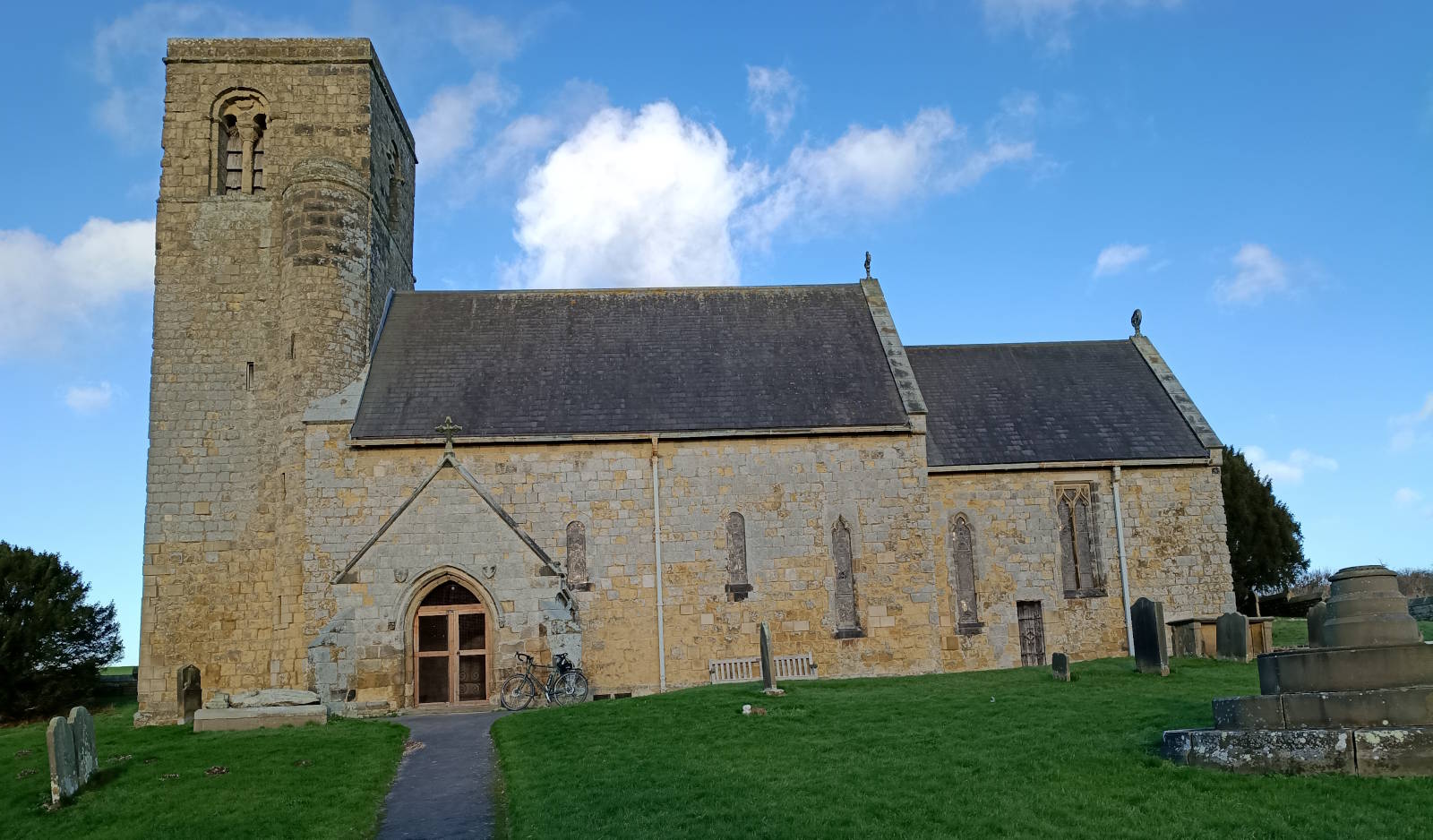
I carried on through Duggleby, West and East Lutton and Weaverthorpe: villages I came through last March following the mysterious Gypsey Race stream. It was in full flood today, which is not to say very much.
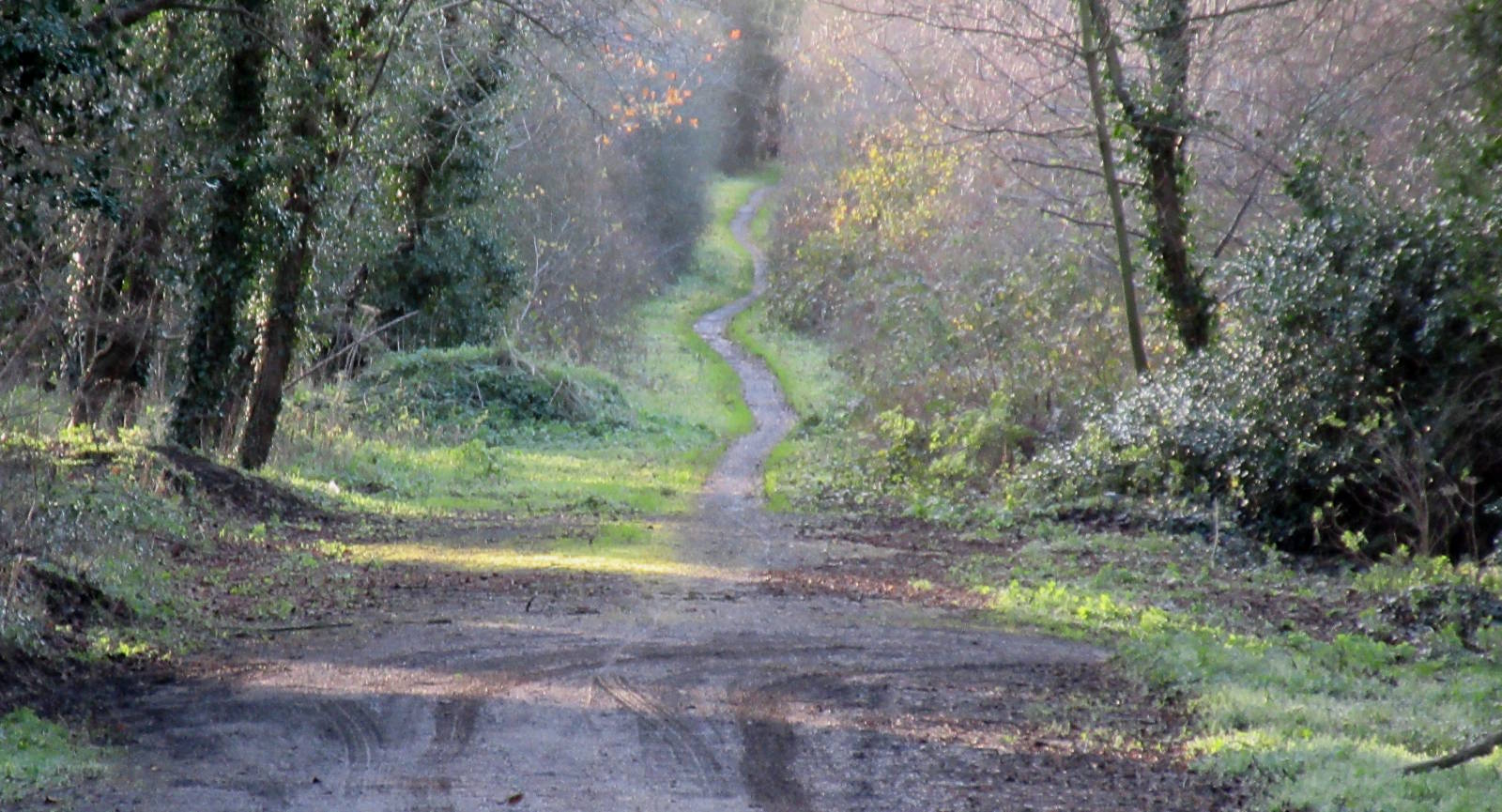
I joined the A64 at Sherburn. I knew from Google Street View homework that there is a half-decent bike path alongside the road. At one point it pushed its way through a wood. This was handy, because I had drunk a lot of water and needed to do something half-indecent.
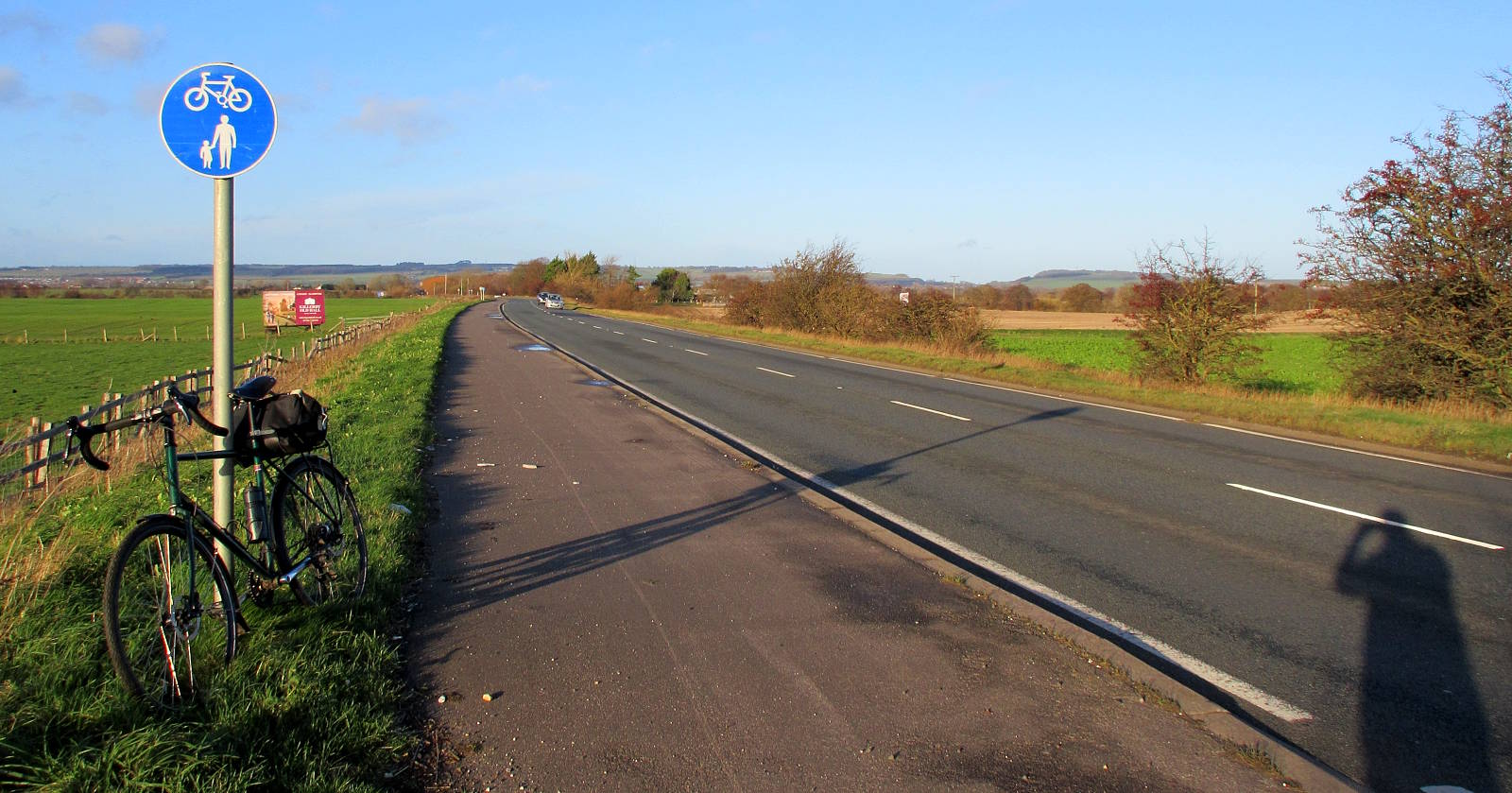
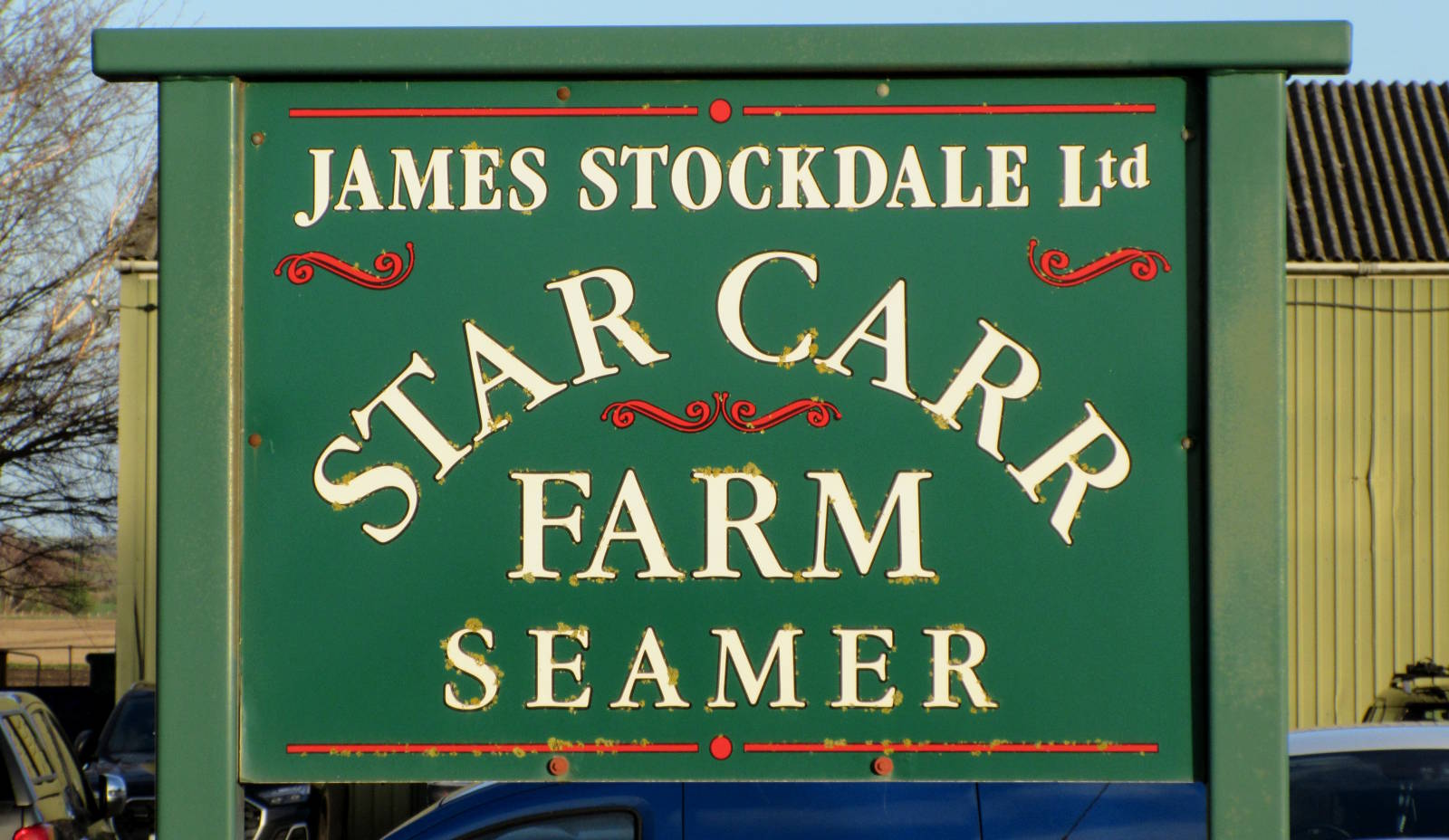
And so to Star Carr. There’s a footpath that goes near to the site of the revelatory dig, but there’s nothing to see now. It’s just bland agricultural fields belonging to Star Carr Farm.
From the bike, the closest you can get is a bridge over a drainage ditch. Look up along the line of the water to where it almost disappears from view. The old settlement was about there, on the western shore of Lake Flixton.
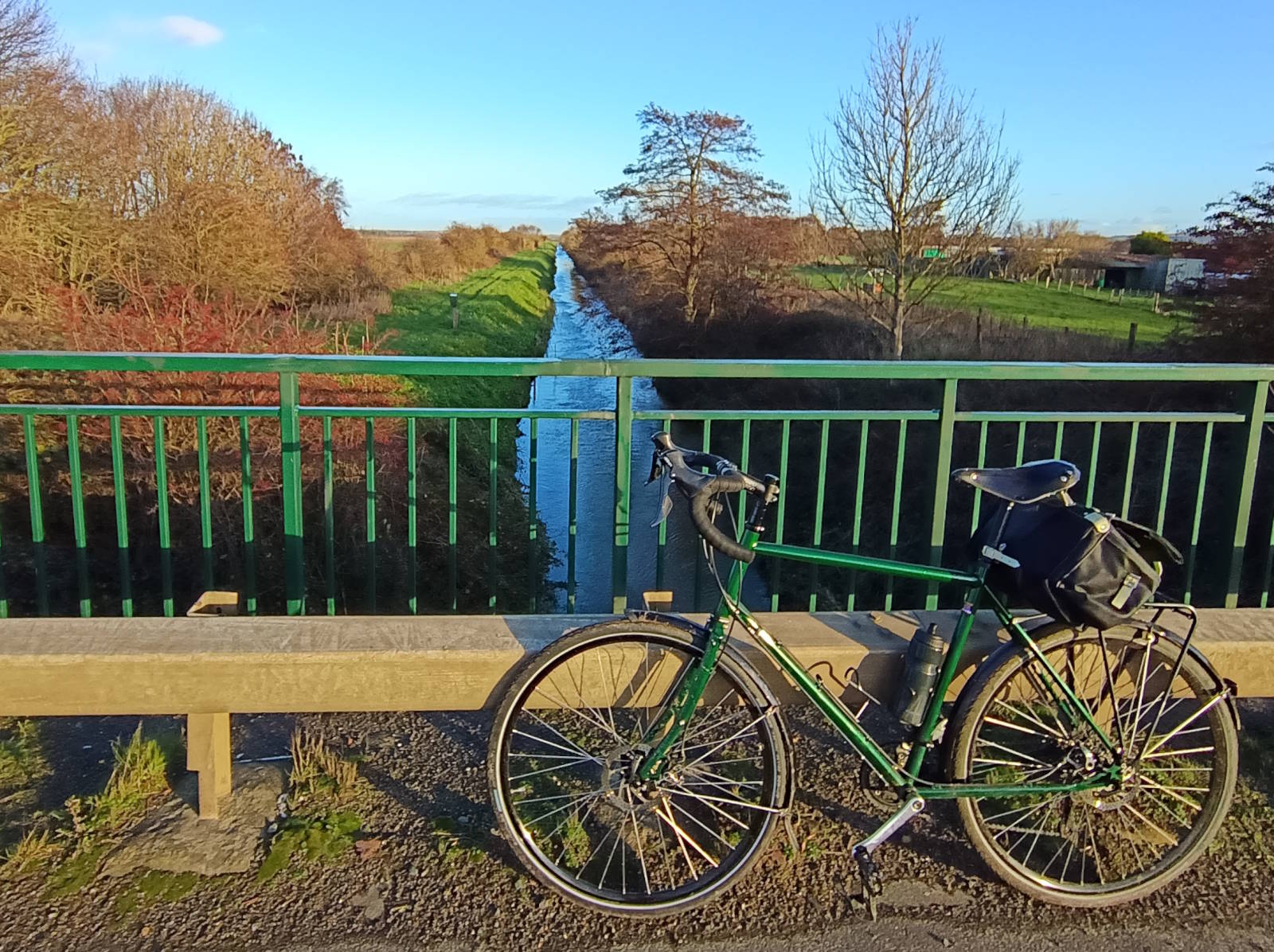
Here, hunter-gatherers fed on deer and fish by the side of that great glacial lake. They lived – some of the year, perhaps sometimes all – in a shoreline roundhouse made of rushes, branches, reeds, leaf and bark matting. Britain’s earliest known dwelling.
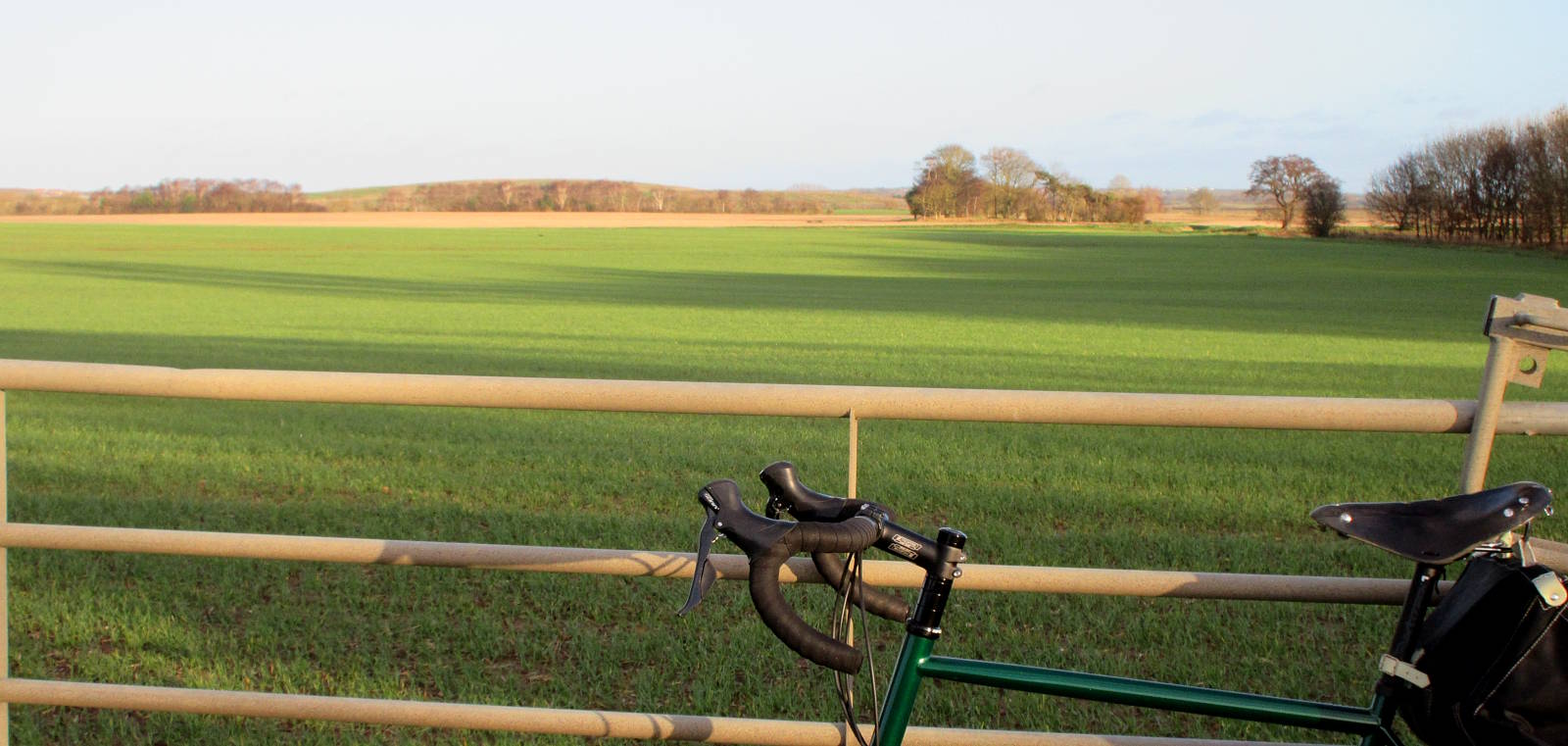
No sign of the lake now, of course. The land is all dried out. And those archaeological remains that remain won’t remain for long. It was the damp peat that preserved the Star Carr finds. But now that it’s no longer damp or peaty, the huge area of uninvestigated site may well decay before future diggers can get to it.
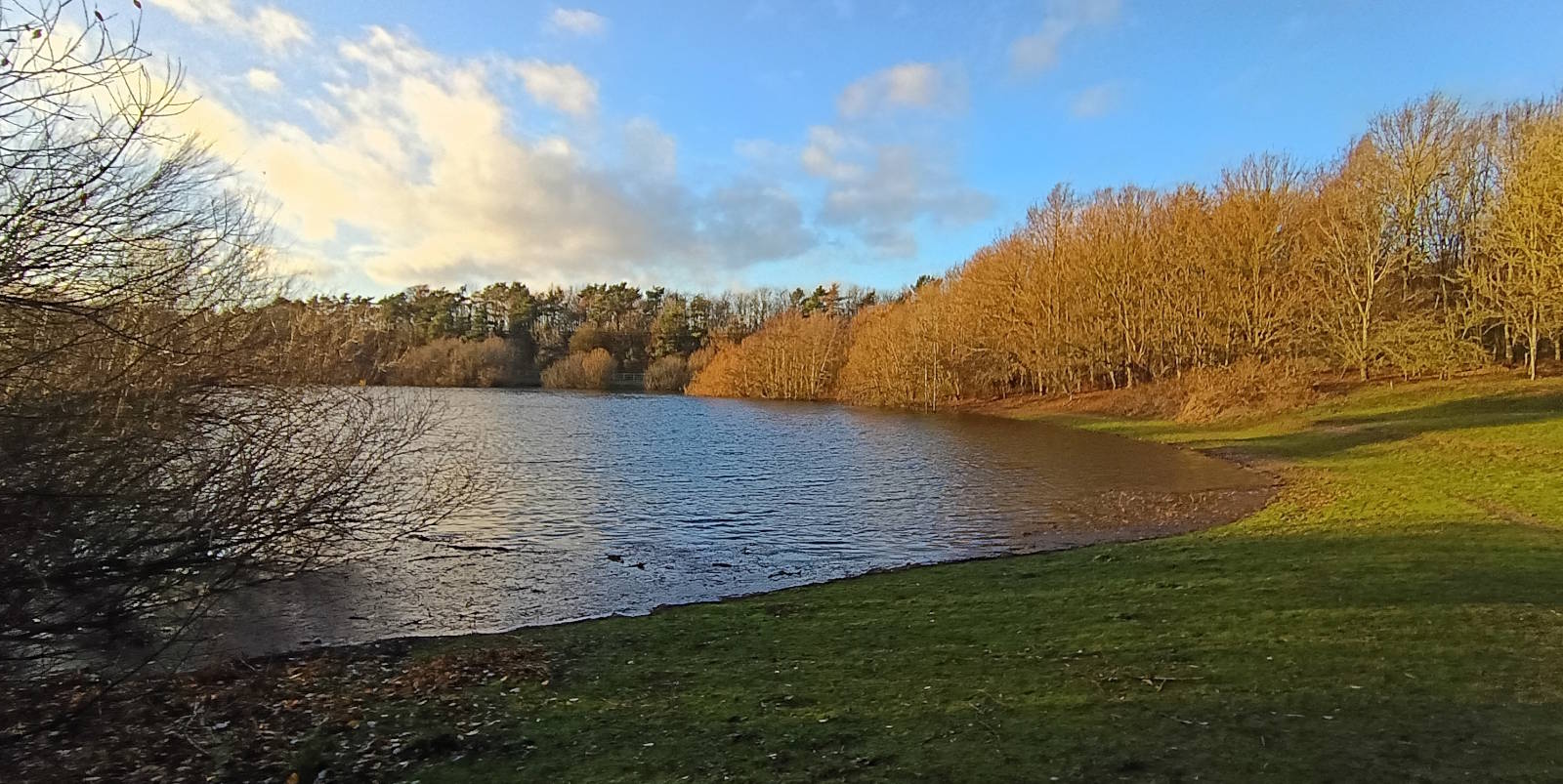
So it takes some imagination to picture life 11,000 years back as you stand here with your bike. But hang on: a mile up the road, still on a good stretch of A64-side bike path, is Burton Riggs.
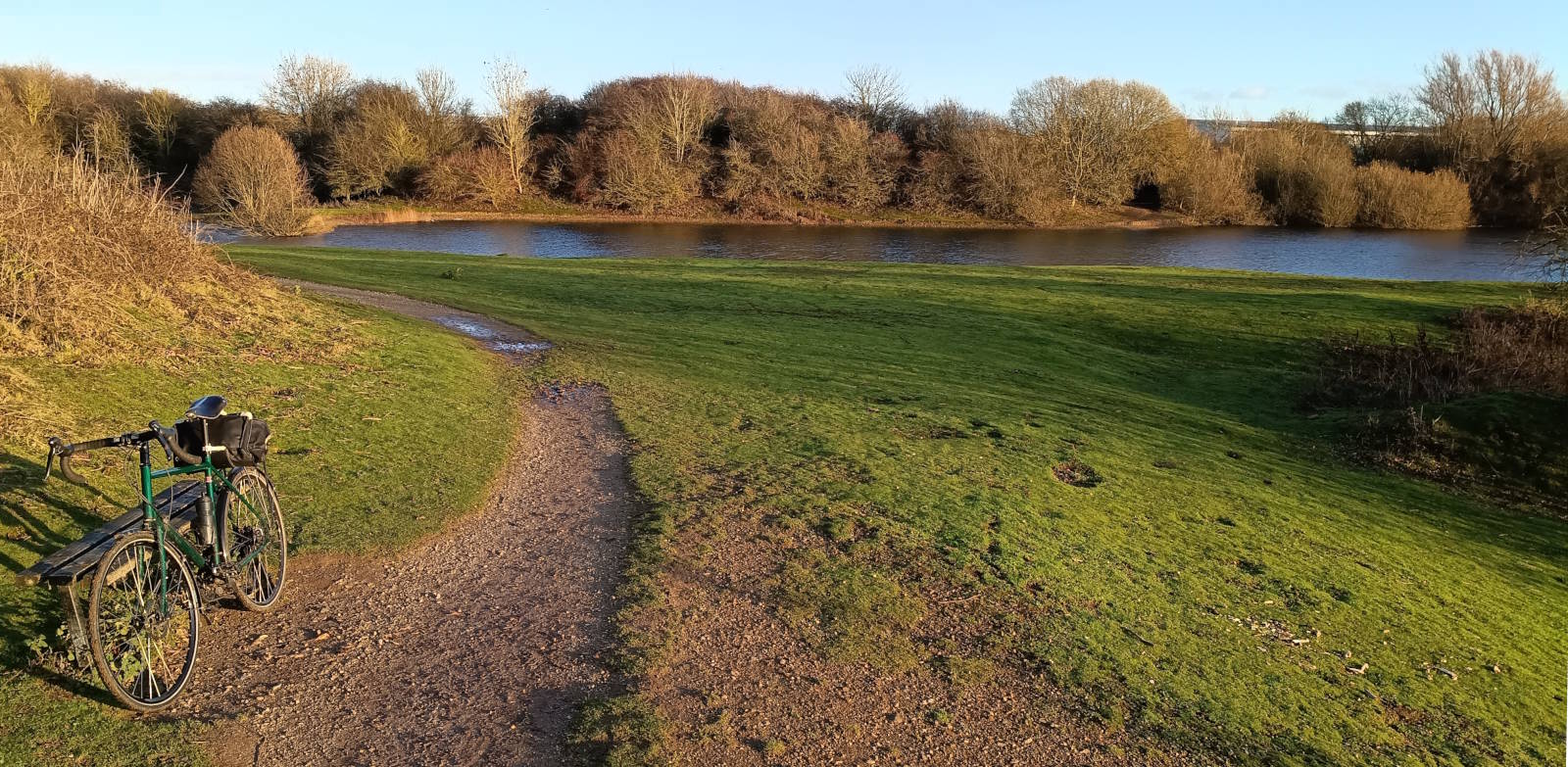
It may sound like an NFL quarterback, but it’s a small nature reserve. With lakes. That prehistoric Lake Flixton did indeed reach up here or hereabouts, though of course the modern water’s edge is in an entirely different place.
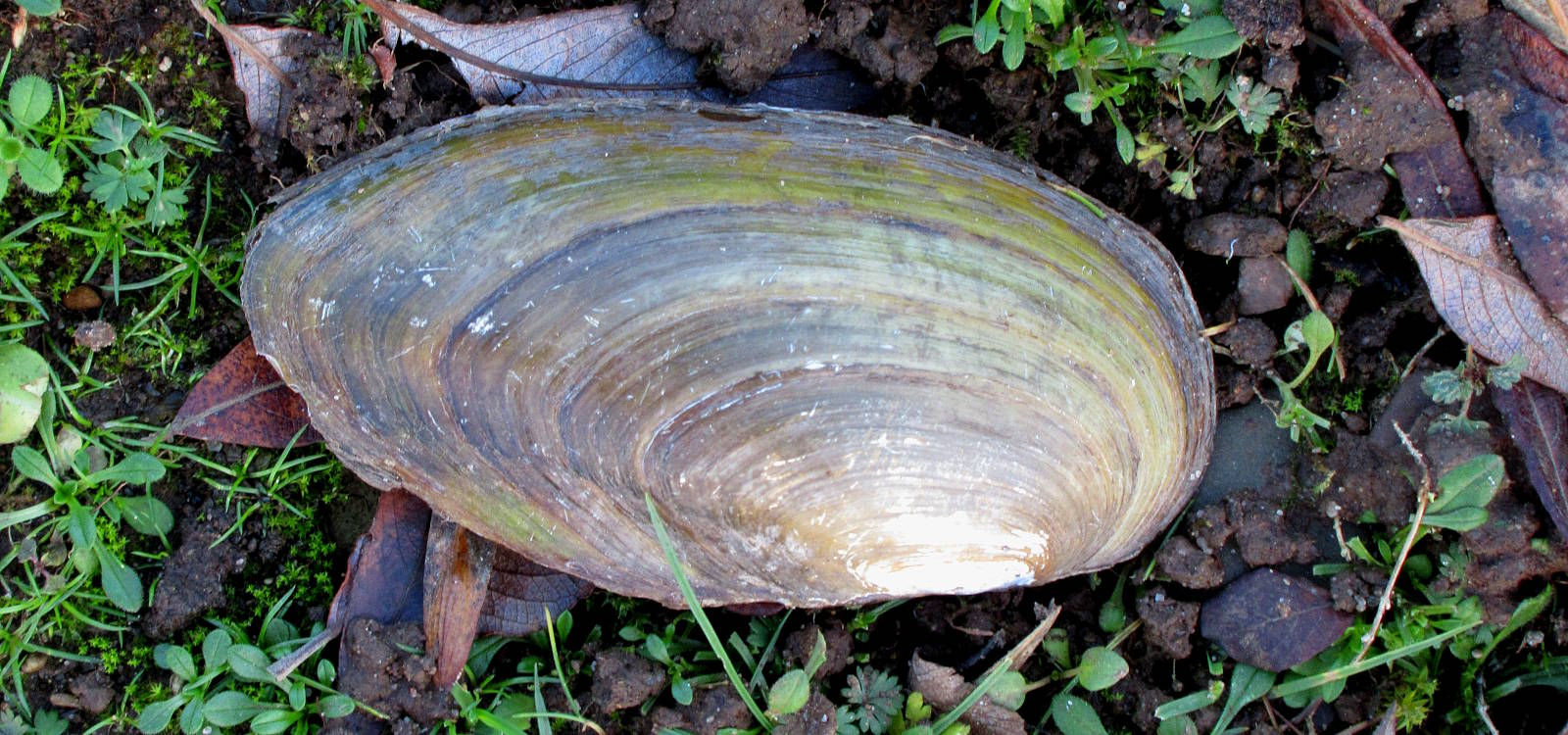
But it’s atmospheric, in a very appropriate way. Perhaps the best you can get in situ to seeing what the land looked like then. I had it to myself this sunny, wintry afternoon, and it was easy to picture a few mesolithic families huntin’, shootin’ and fishin’ by the waterside in the low sun. Especially when I found a shiny bivalve shell sitting on the shore.
But I had my own hunting to do. For a post-ride, pre-train-home beer. I found it too, in the pub over from the station: a pint of Landlord. How timeless.
Here’s to our ancestors.