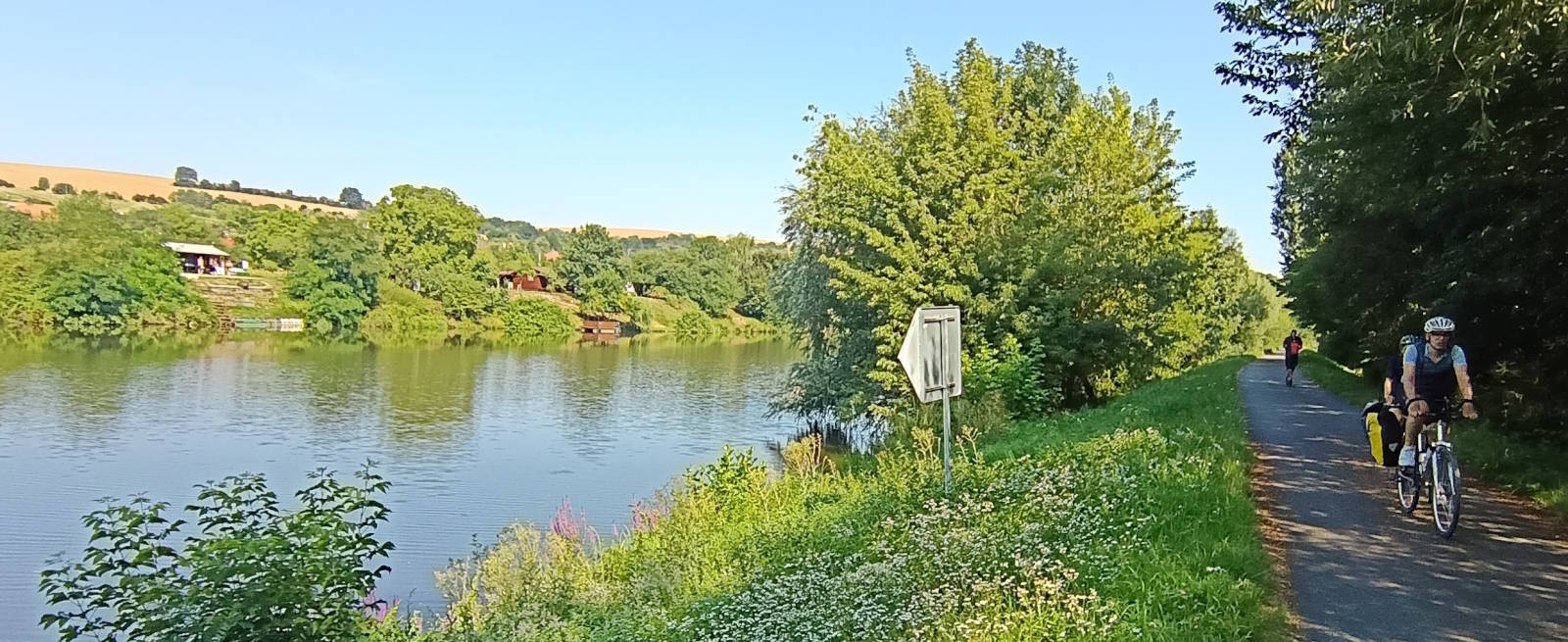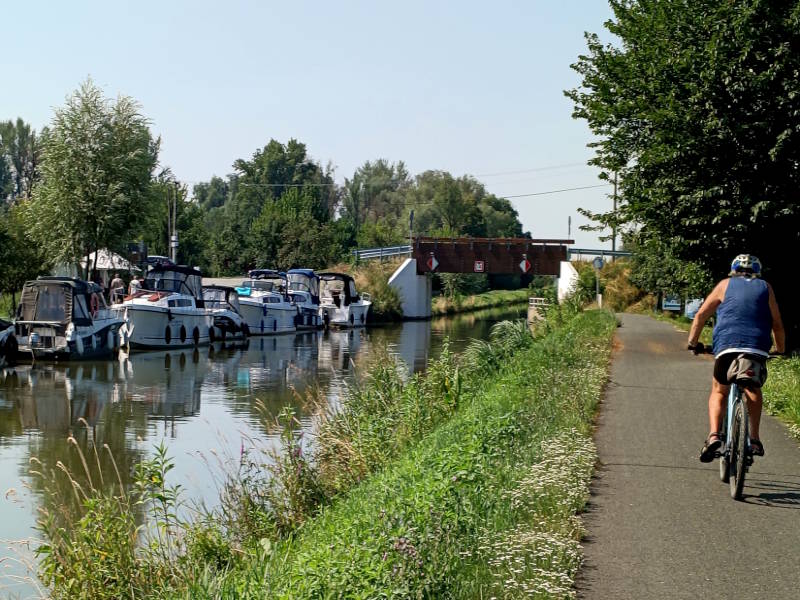
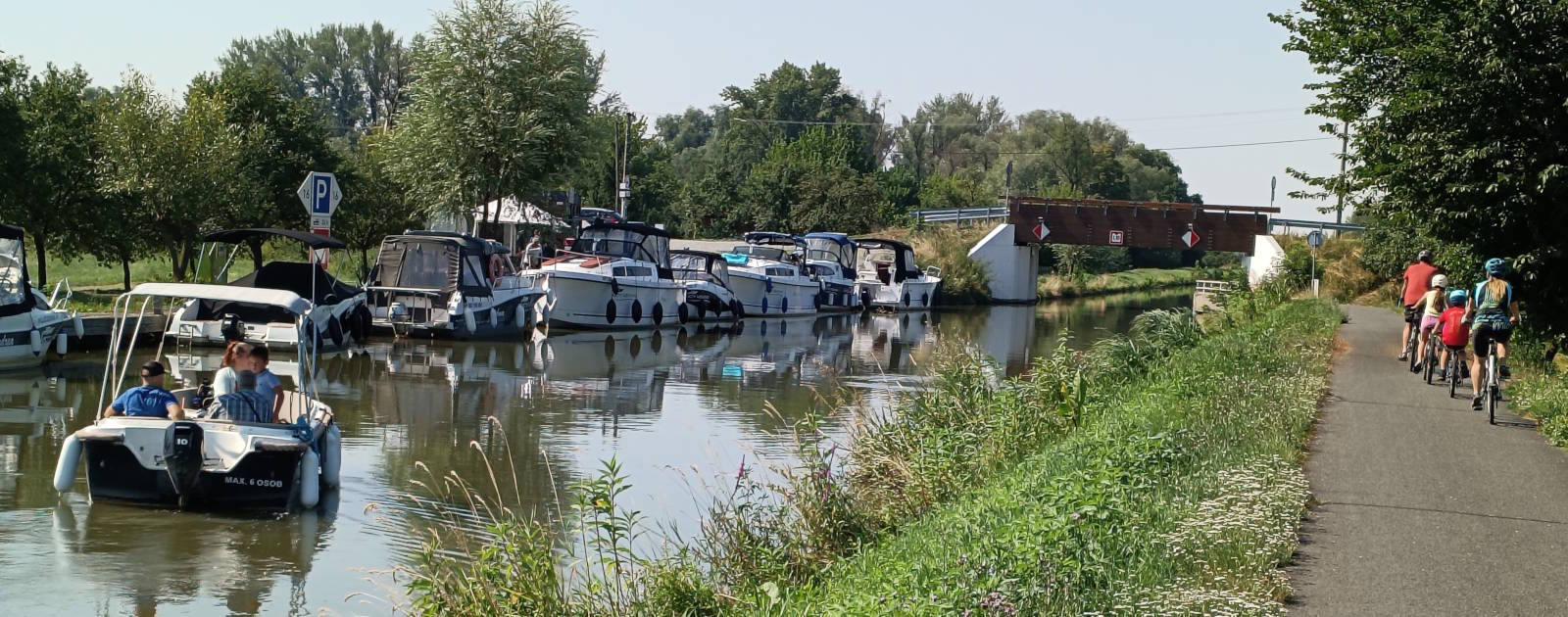
Like our sense of pitch, and graphs to represent the awesome distances of the cosmos, Southern Bohemia’s canals are usually on a log scale. They were built to wash tree trunks down from forests to sawmills down below, in other words. But in Southern Moravia there’s a more familiar canal, with all the things you expect from well-behaved artificial inland waterways: narrowboats, locks, lift bridges, towpaths, beer vending machines etc. Blink and you could be in Belgium. But with cheaper beer.
The canal was built in the 1930s by shoe manufacturing giant Baťa to transport coal to their power plant at Otrokovice. The proper canal bit runs about six miles from Uherské Hradiště, where it leaves the Morava river, rejoining it further up at Spytihněv. From there the Morava is navigable to Otrokovice, and the towpath follows the riverside for another seven miles or so. It’s a beautiful cycle ride.
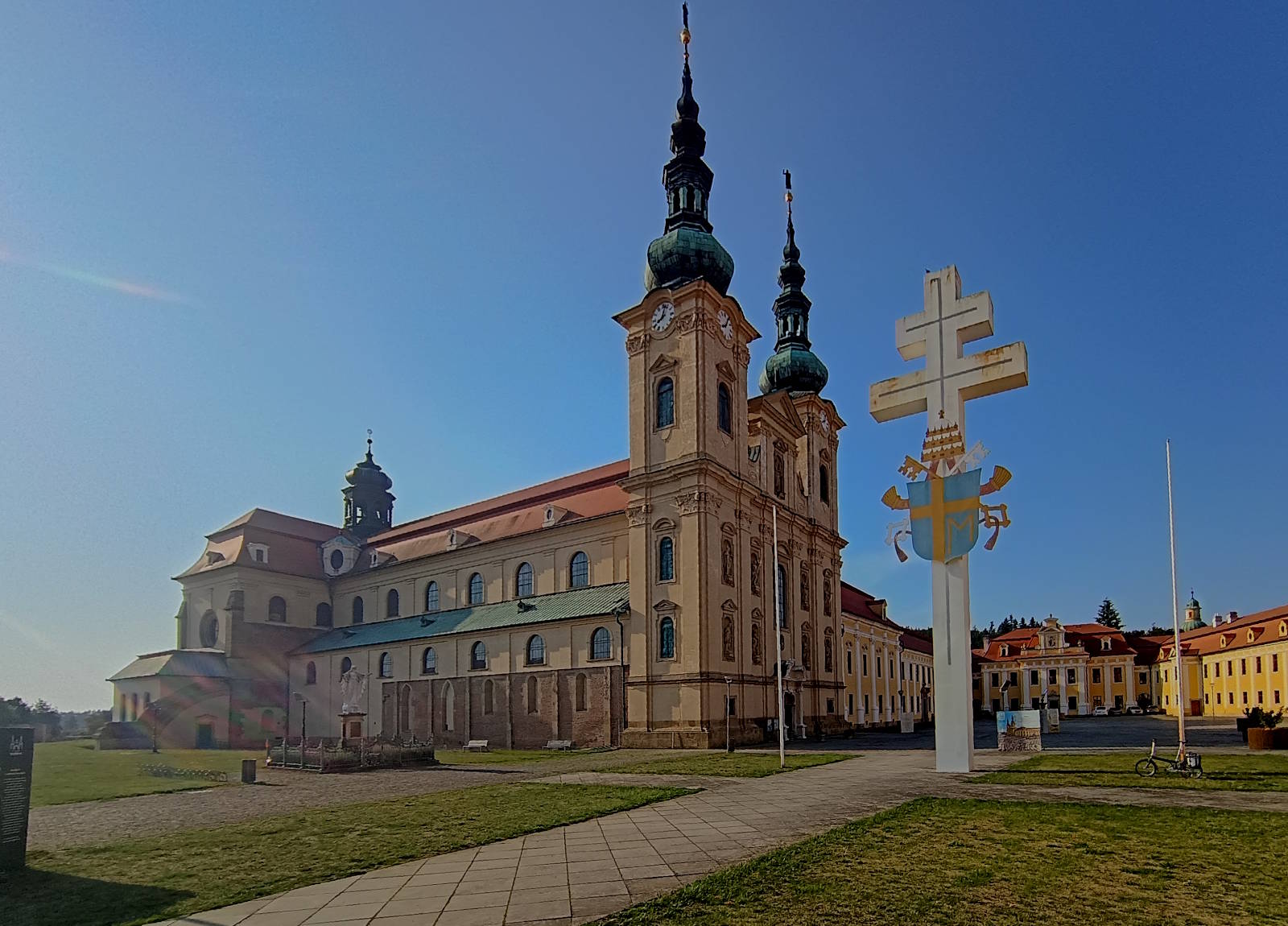
I started my ride today a few miles west of Uherské, at the pilgrimage site of Velehrad. The splendid Baroque Basilica here is one of the country’s most important religious destinations, with the annual National Pilgrimage each July drawing thousands. Pope John Paul II visited in 1990, though I don’t know if he had a beer at the pub-resto opposite.
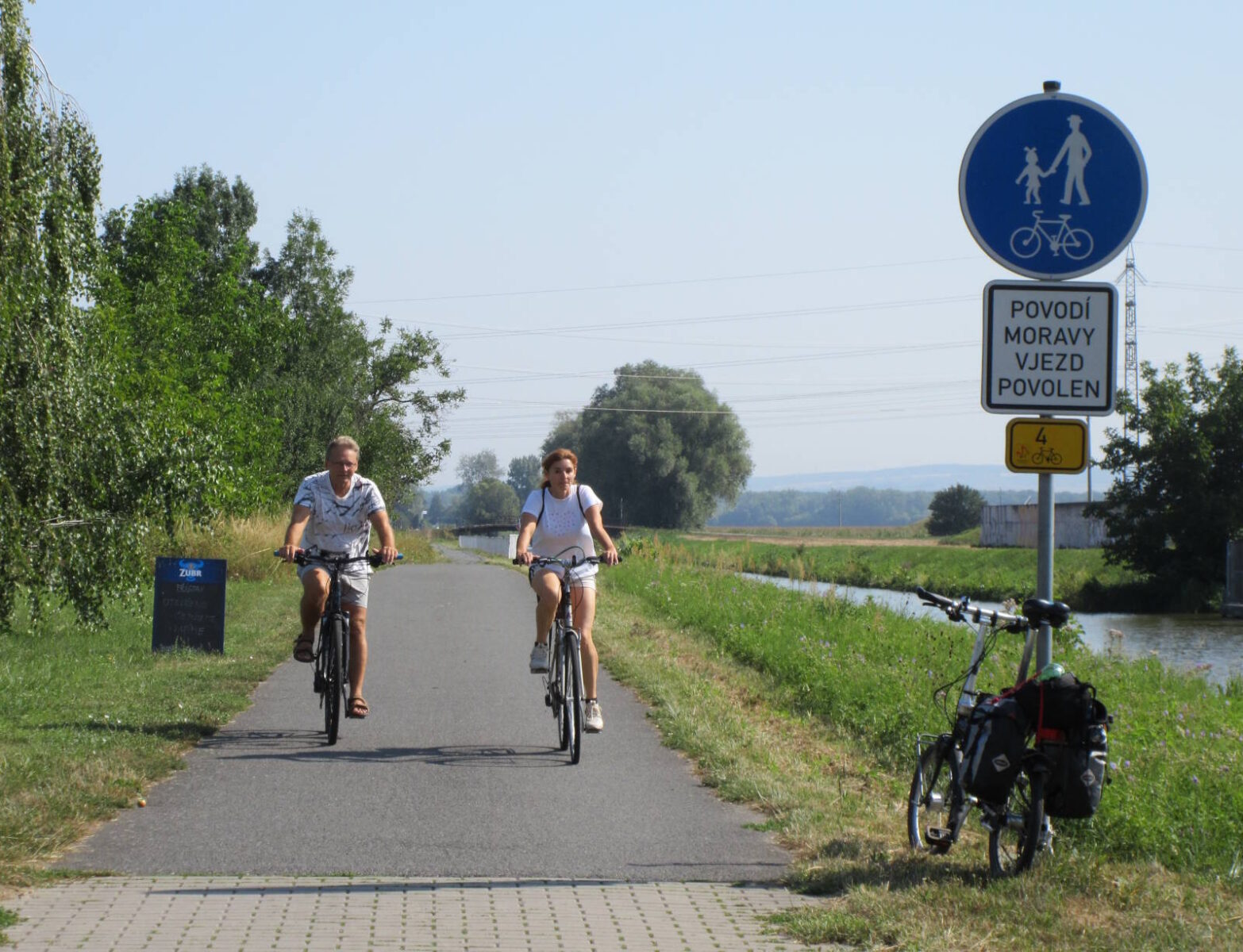
The site is strongly associated with Cyril and Methodius, two saints who brought Christianity to the region in the 9th century and who are two founding fathers of Slavic identity and culture. They also devised an alphabet central to that sense of identity. A glance at the first of those two names will reveal which one. That’s right. Glagolitic.
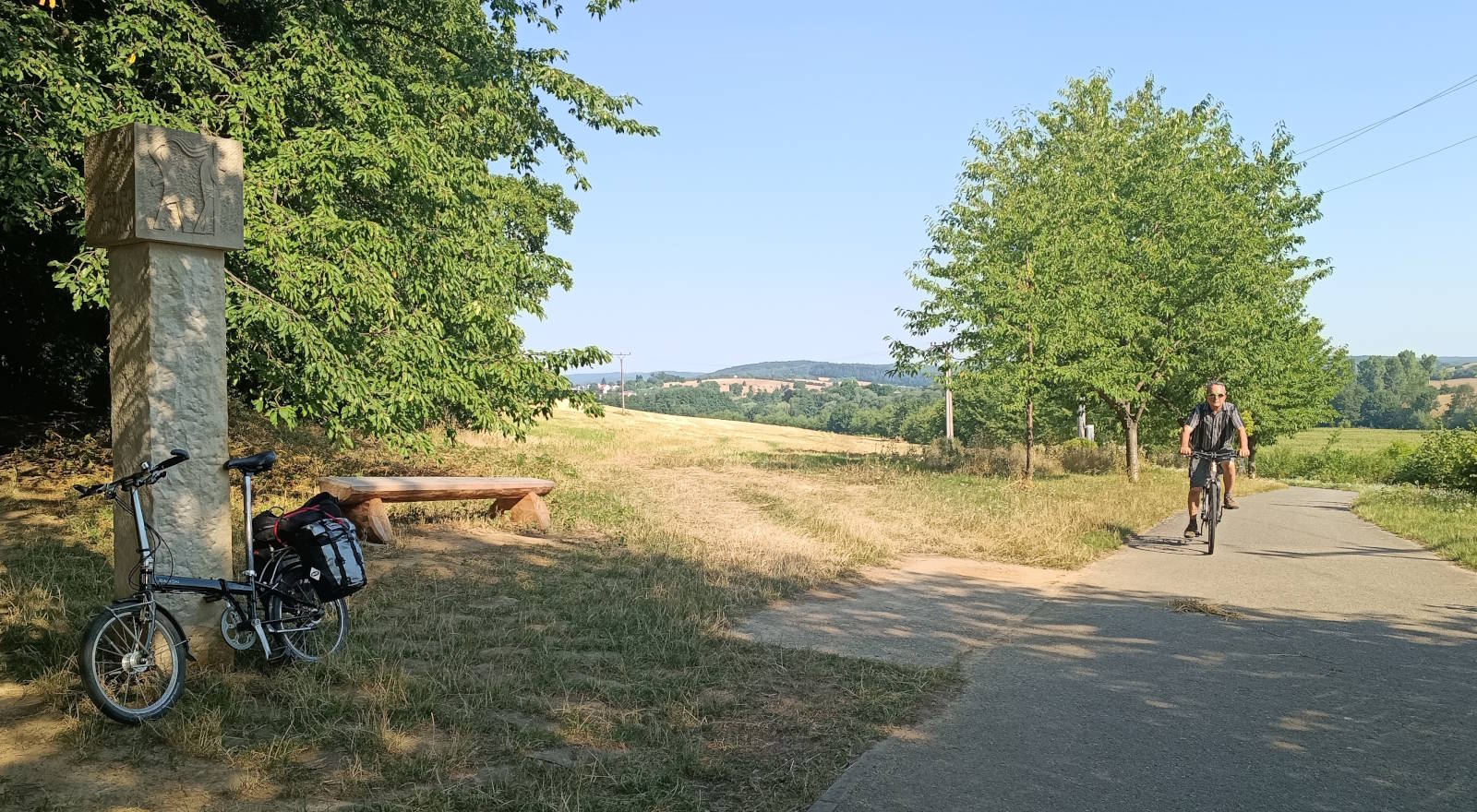
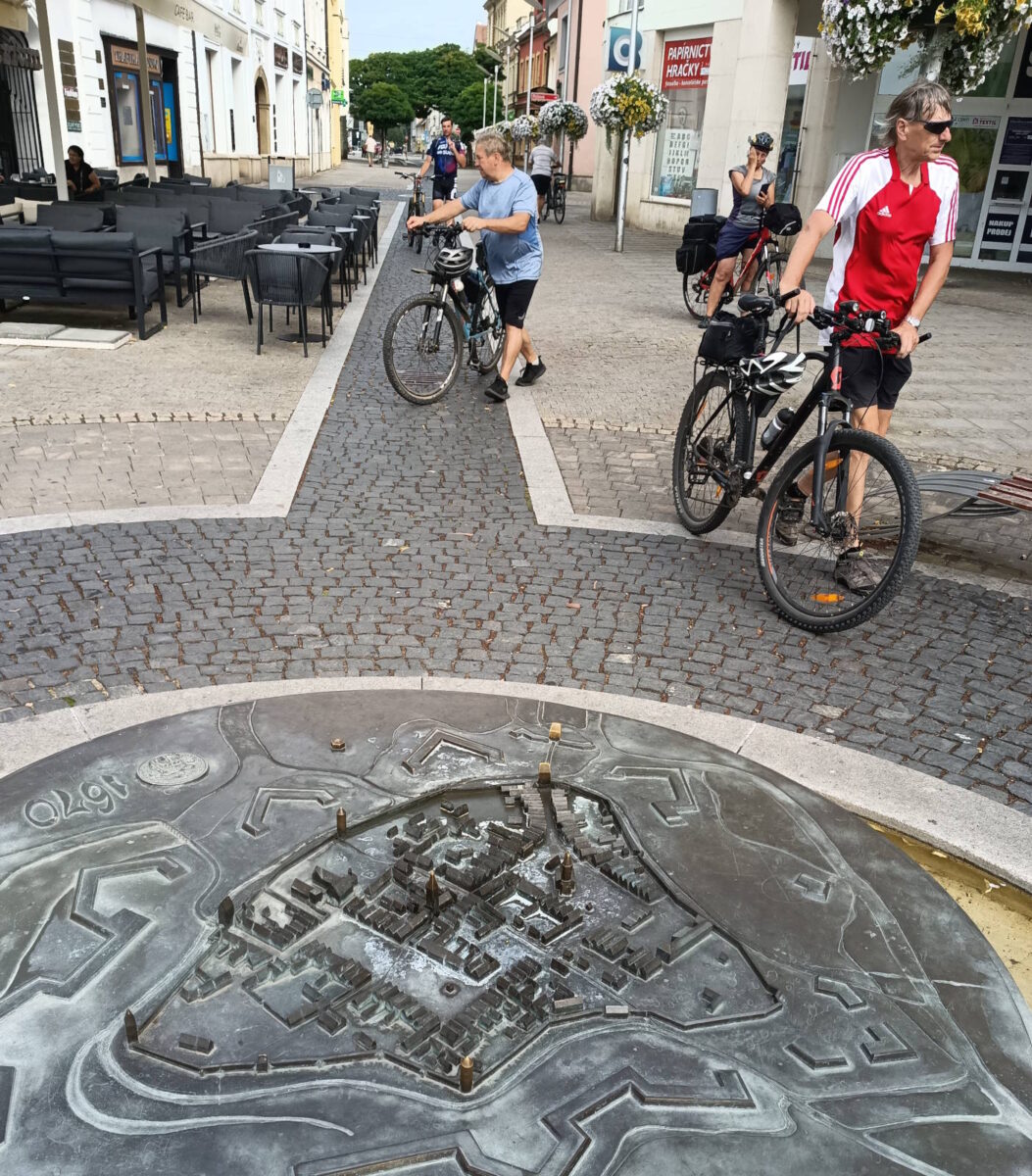
And there’s a Cyril and Methodius Trail, a smooth car-free lollop over the gentle hills from Velehrad to Uherské, where you can pick up the start of the canal. Goodbye South Moravia, hello Flanders, without the windmills but with half-price beer.
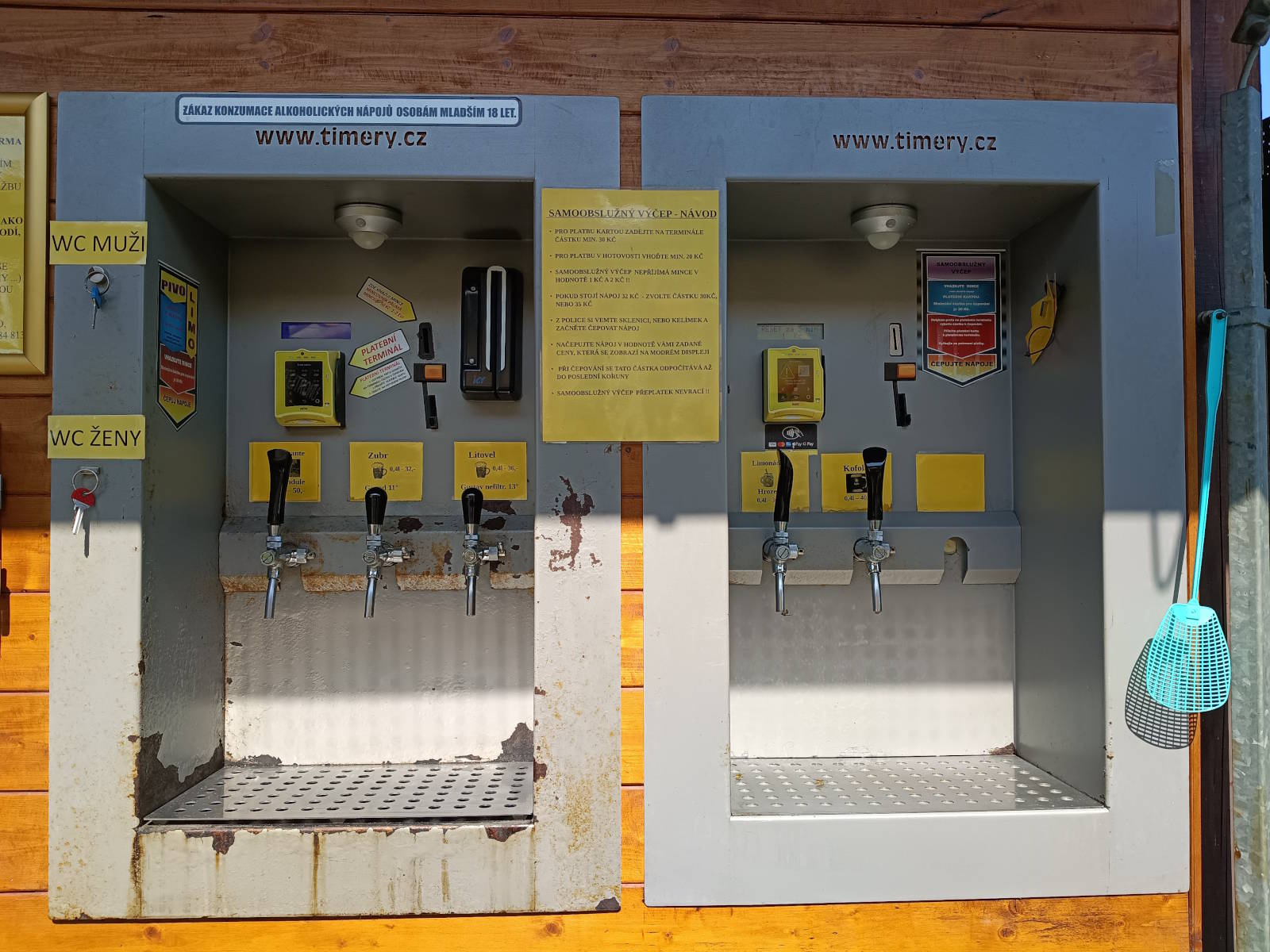
Indeed, one of the waterside refreshment kiosks even offered vending-machine beer, just in case they were closed for a siesta on this hot sunny afternoon. They also, considerately, offered keys to the toilets.
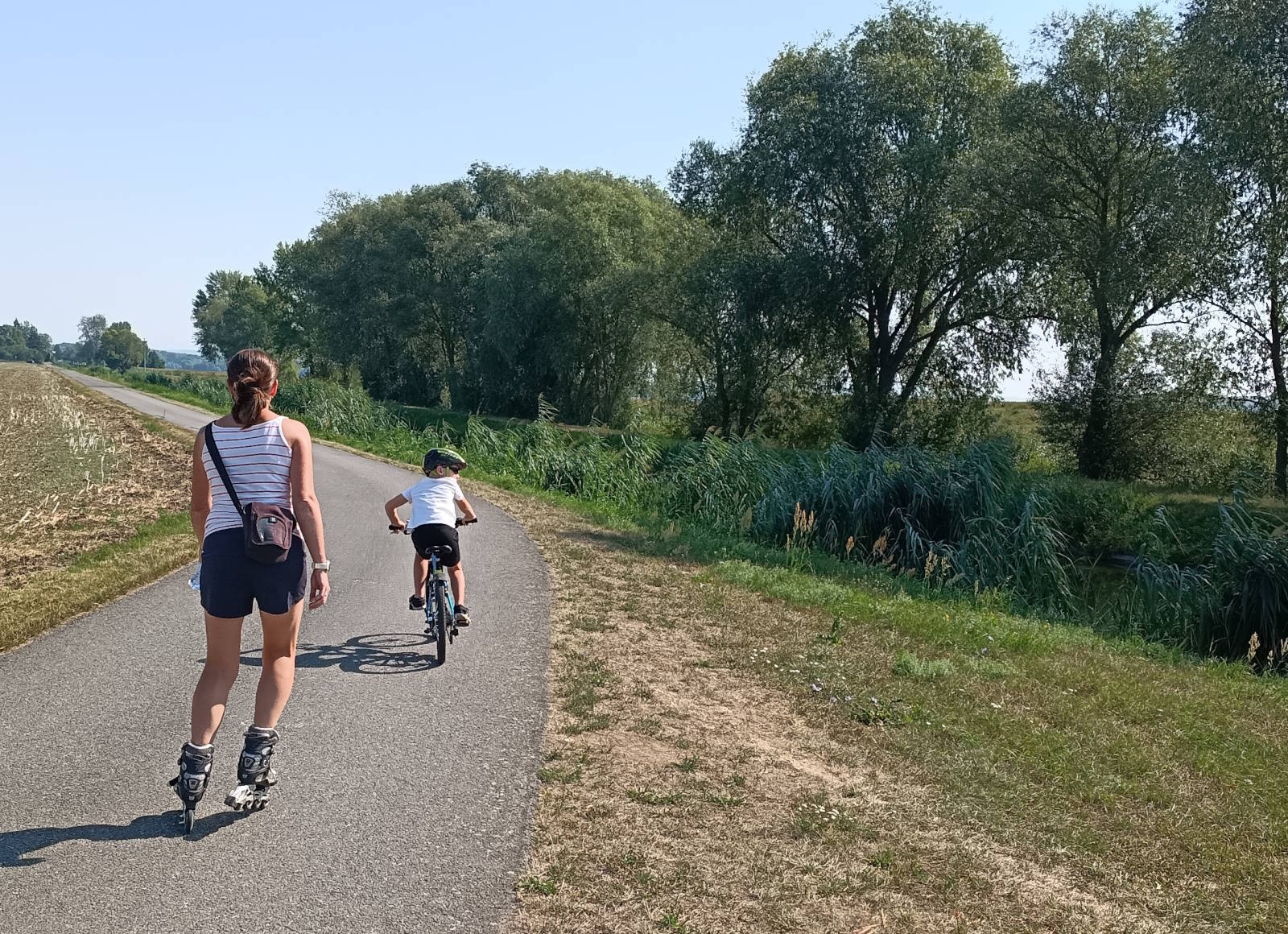
It was a glorious ride, and there were plenty of families, couples and individuals out on bikes – plus a very cool mum on rollerskates chaperoning her cyclist child.
There weren’t a great many locks – this part of the Czech Republic is pretty flat, hence the Low Countries feel – but there was some sturdy water-level engineering at the north end of the cut where the Baťa rejoins the Morava.
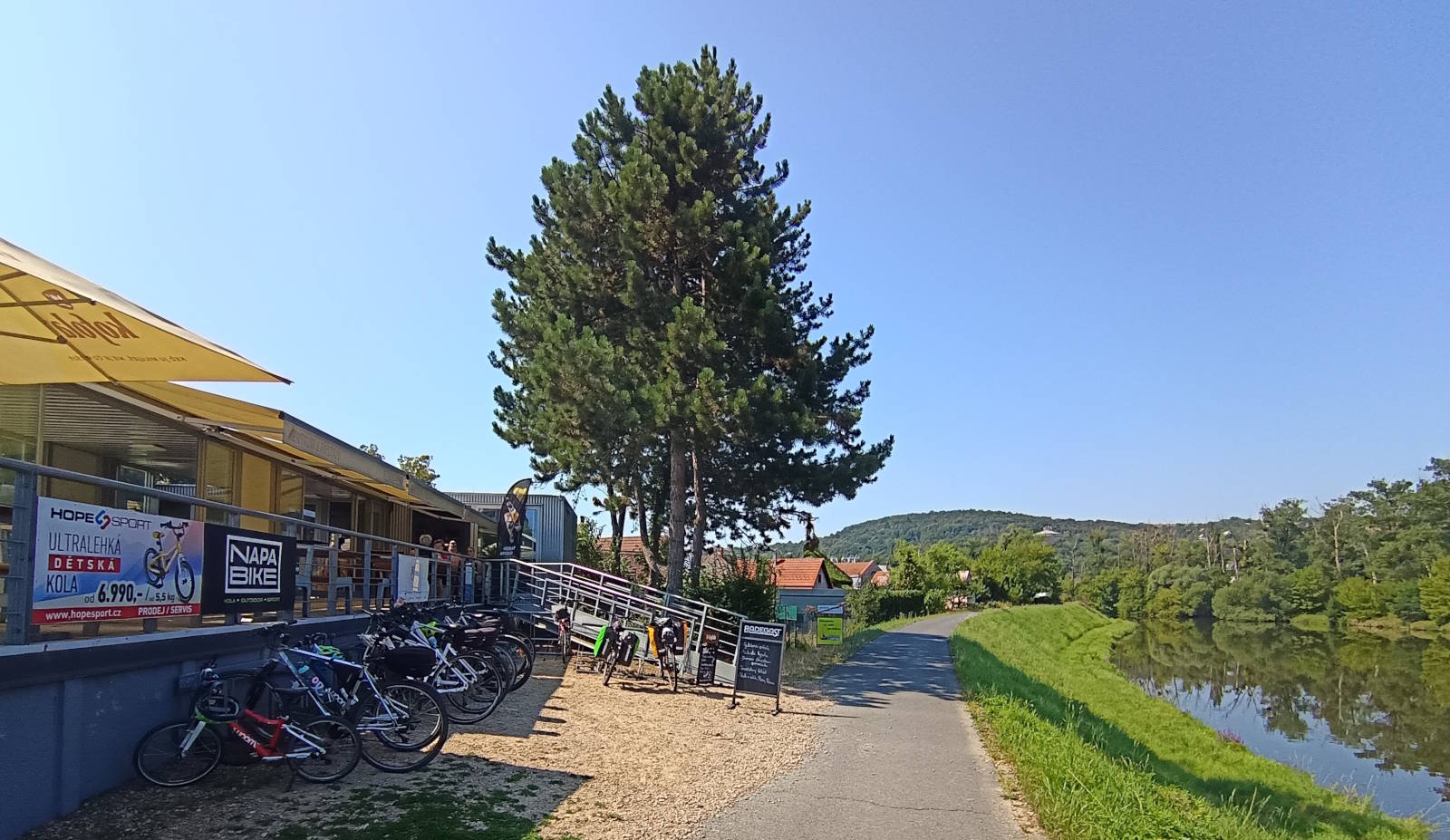
The towpath alongside the river was just as good – all flat and car-free, and tarmac apart from a short gravel section of a few hundred metres. And there were a few pub-bar-restaurants to eat and drink overlooking the water, as the presence of a few dozen bikes demonstrated.
At Otrokovice I could hop on a train to Zlín, where Baťa made many of the world’s shoes a century ago: a red-brick place unlike any other Czech city, and interesting for it. But I don’t have space to shoehorn that story in here.